Tuesday, August 15, 2023

Steins;Gate: Linear Bounded Phenogram (PS4)


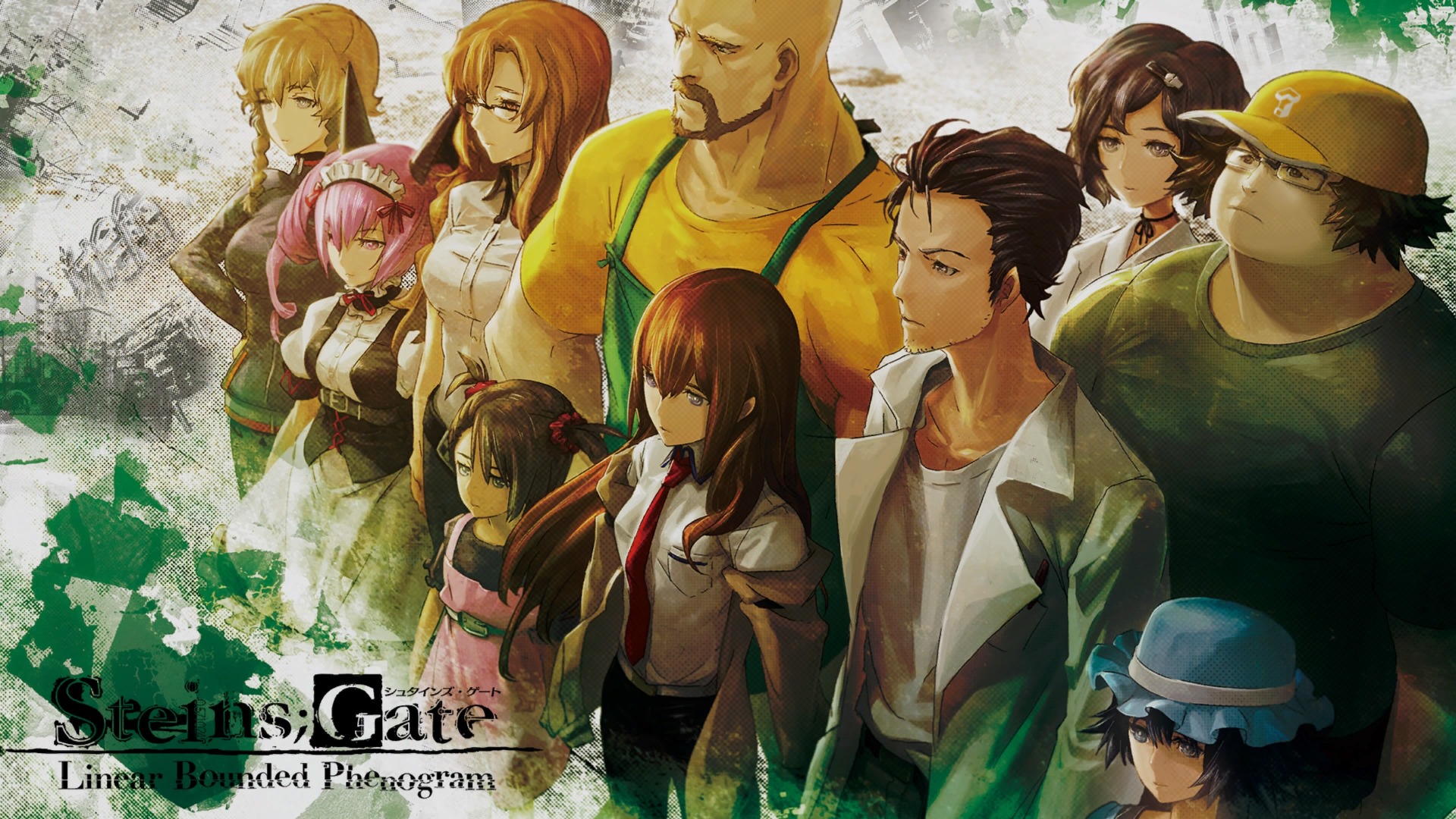
Steins;Gate: Linear Bounded Phenogram is a visual novel which is a spin-off from Steins;Gate. It is a port of the original game that came out for the PS3, Xbox 360 and Vita, although that version was never translated into English. This port was translated into English and released as a bonus with PS4 and Steam copies of Steins;Gate Elite. It contains eleven side stories which expands upon the events of the original visual novel, although this version lacks trophies, which is a shame but not a huge deal.


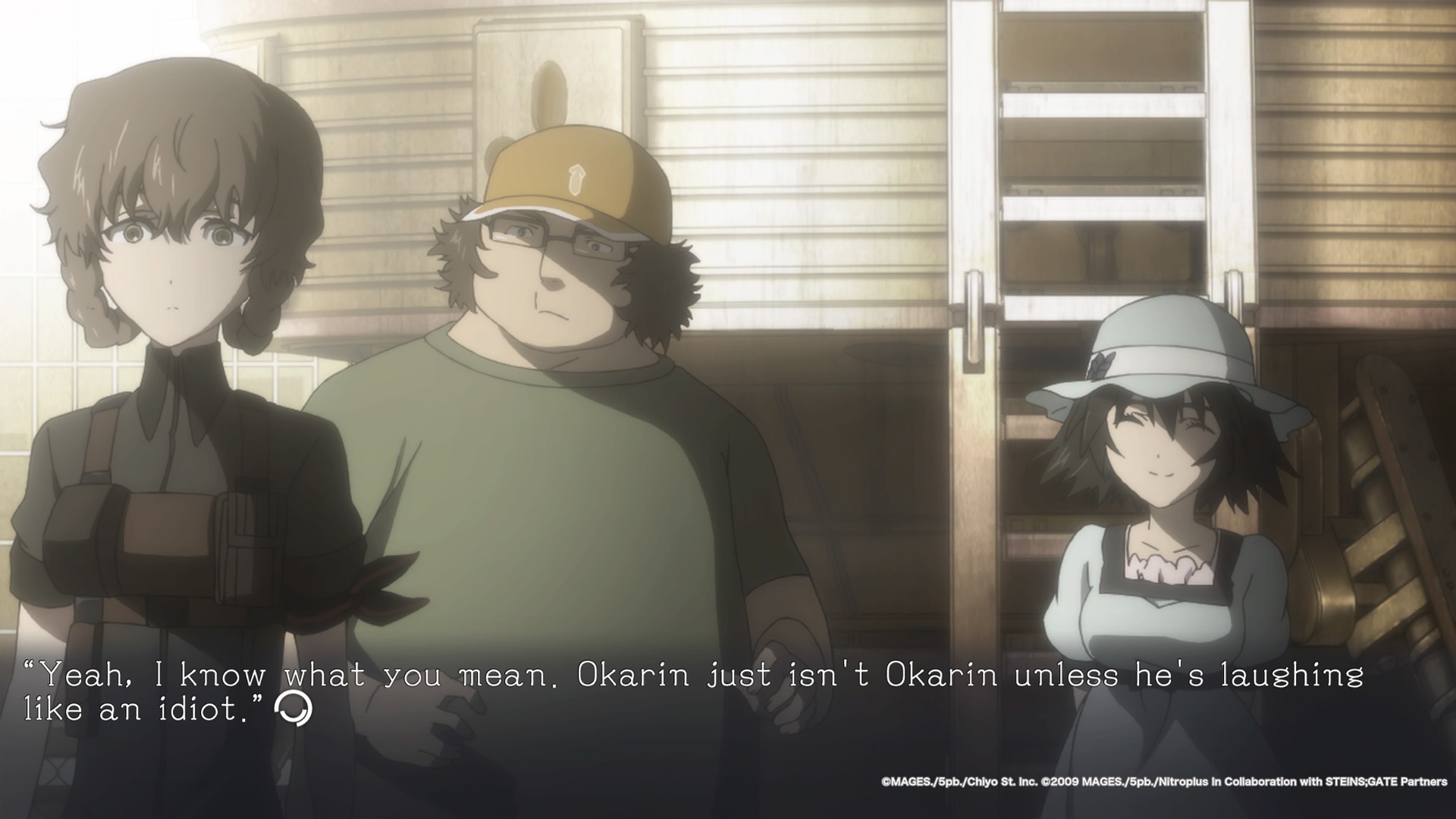
If you are playing this straight after Elite, then there will be quite a bit of adjustment required. This is because the graphical style is completely different. Elite took scenes from the anime, while this game reused assets from the original visual novel. Therefore the backgrounds and sprites have a totally difference aesthetic. That said, this is a unique aesthetic and looks great. Despite the majority of the game being reused assets, there are still a few new backgrounds and all of the CGs are new and specific to this game. The game is completely voiced by the same voice actors, so this is not just a cheap and lazy cash tie-in.


The game expects you to have already played the original and that you are familiar with all the characters, the events, and the concepts. The various side stories take on different tones, some are serious, while others are sillier and more lighthearted. The concept of the game is that each of these side stories take place in alternate worldlines, or possibilities. For example, in the very first side story, Okabe casually uses D-mail and time leaps with none of the serious repercussions that the main game had. Each side story has a different supporting character as the narrator, so it can feel quite different given that you’ll be hearing their inner thoughts which also reveals a lot more about their characters than ever before.


Each side story still roughly fits within the events of the main game, somehow. Sometimes it stretches the scenario quite a bit and it basically asks you to overlook that. Most of the side stories take place within the same few days as the main game. There are plenty of nods to the events of the main story, especially with the secrets that each character holds within themselves. Time travel still features quite heavily as a plot device and while this game was originally released before Steins;Gate Zero, there are some things that happen here, that you will recognise or see referenced in that game.


The scenarios in each side story generally works and there are times where it rivals the original in terms of raw emotions. Exploring the what-if scenarios and having that different perspective so that we can see the thoughts of the side characters provides a lot of additional impact. While some of the side stories don’t actually reveal too many additional major events, by going into depth on what we had already known, it makes it much more nostalgic and full of potential. Although the ones that cover the same events from a different perspective are a little bit more boring in comparison.


There is one particular chapter that deserves mention, and it is one of the later ones. It is interesting in that it is a mystery story akin to the original. Obviously it isn’t as long but it doesn’t need to set up all the concepts and is able to jump right into it. As the mysteries keep piling on, you are waiting to reach the end and the big reveal. Once it does that, it’s not that it is unsatisfying as it still all clicks into place, but it stretches the believability of the events. And this is a theme because a lot of the events in the side stories rely on coincidences, ones that seem to always somehow involve the cast of supporting characters. While this is necessary in terms of game design, it can raise a few eyebrows when the world seemingly revolves so much around this group.


The game has limited interactivity, as you’d expect of a visual novel. The only control you have to is to pull out your phone and reply to different text messages that you’d receive. These text messages end up becoming the collectibles of the game as different replies will branch off the content of subsequent replies. There’s an in-game tracker to see what you are missing. Story-wise, these text messages don’t affect it at all and you will always reach the one ending for each side story. Each route varies between an hour to two hours long, so that’s around 15 hours of content, depending on your reading speed.


Not all side stories are available from the get go, you will need to unlock batches of them as you complete others. After reading all the side stories, there isn’t anything else to do unless you want to replay them to get all the text message replies. This English translation is a bit of a rushed job. This is probably due to the game being a bonus inclusion rather than a standalone release. It’s fine for most of the game but towards the end, it’s like the editor either ran out of time or was just sloppy as the frequency of typos increased.


Overall, Steins;Gate: Linear Bounded Phenogram is a good bonus for fans of the original Steins;Gate. You get to spend more time with the characters and explore a few alternate worldlines including some really interesting ones. On the other hand, it does retread a lot of things and relies heavily upon knowledge of the original game. There are certain sections of the game where it is obvious that there are different writers as the style and themes aren’t as focused and tight. Still, it gives you a nostalgic hit and it is a good expansion to the Steins;Gate universe.

----------------------------------------------

For other game reviews, have a look at this page and this page.

(As an Amazon Associate I earn from qualifying purchases)

Thursday, August 10, 2023

Dogeza: I Tried Asking While Kowtowing (2020)


Dogeza: I Tried Asking While Kowtowing is based on the manga, with 12 episodes and an OVA. This is a sex comedy so there’s plenty of fan service and even the author was surprised that it was adapted into anime form due to its content. Each episode is less than four minutes long. Considering that there is an ending theme and a short intro, the content is a tad bit over two minutes long, so there isn’t much time at all.


The anime follows Doge Suwaru, who for some reason, will go around kneeling (i.e. dogeza, or kowtowing) and begging the girl to reveal their breasts or underwear for him to see. Each episode has a different girl, and this is pretty much the whole anime. It tries to do something different for each girl, but every episode defies logic. There are often cringe-worthy scenarios that can be difficult to watch.


No matter what, the girl will eventually relent. What Doge is doing amounts to sexual harassment, so there are mixed feelings when he succeeds. The sad thing is that the humor doesn’t justify the setting because the humor is non-existent most of the time. You might get a chuckle, but the premise can border on crossing the line to be enjoyable. The humor that works is mostly the narrator commenting on Doge and the absurdity of the situation.


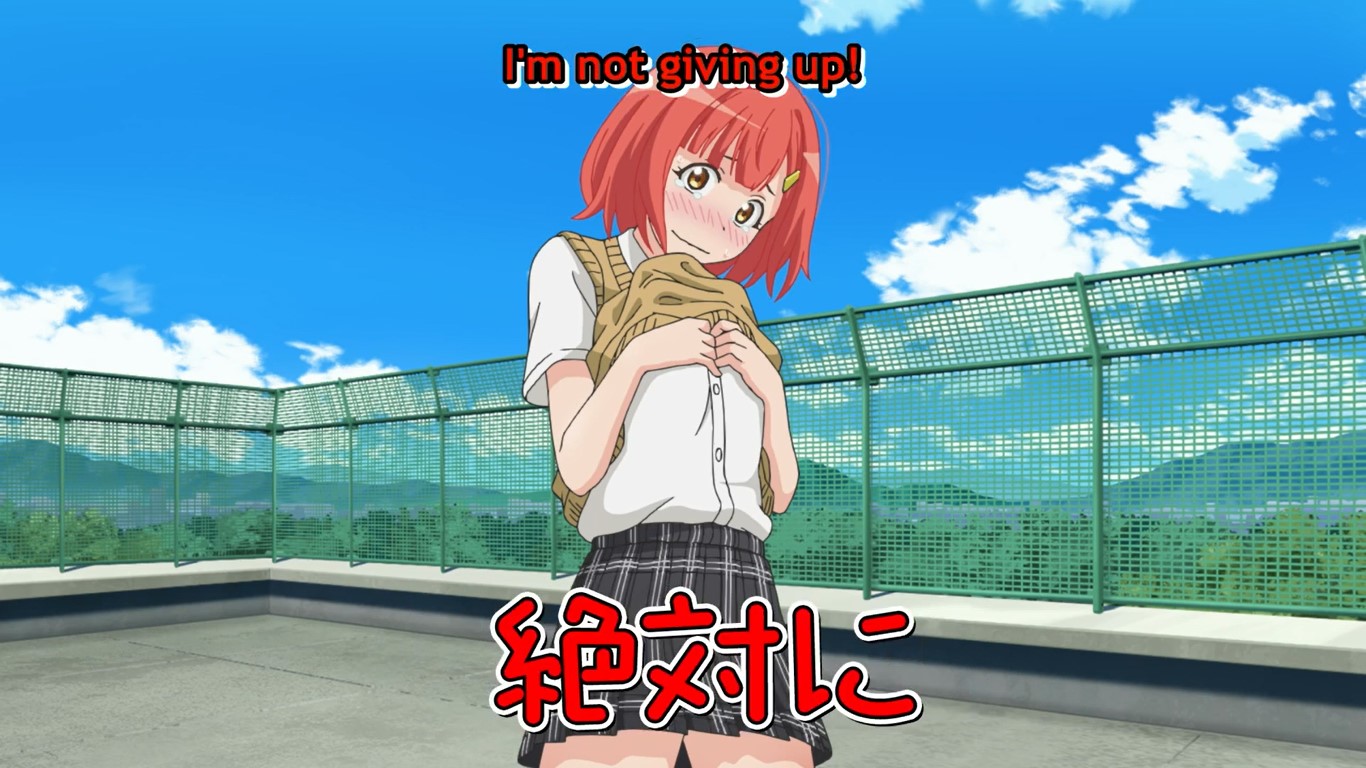
The animation is limited, and it has a visual novel feel to it. You never see Doge, and each scene basically has the girl’s character portrait in front of a static background. There’s a lot of dialogue going on between Doge and the girl as he begs. The dialogue is mostly fluff and there’s no particularly special way he uses to convince the girl. So apart from the premise, there isn’t any substance. Perhaps it is because it is much harder to adapt this into anime form compared to the original manga, so it is lost in translation.


Overall, Dogeza: I Tried Asking While Kowtowing is a decidedly average anime, probably even below average. If you’re interested in the premise, then it’ll take only 45 minutes or so to go through all the episodes, so it is not too much time wasted. However, there isn’t much substance to this anime at all and it can be quite boring and bland. Given that there wasn’t much of a plot, there isn’t much of an ending either. If you’re keen for an anime that focuses on sexual content with a good dose of humor, then Interspecies Reviewers is a much better watch.

--------------------------------------------------

For other anime reviews, have a look at this page and this page.

Tuesday, August 8, 2023

Steins;Gate Elite (PS4)


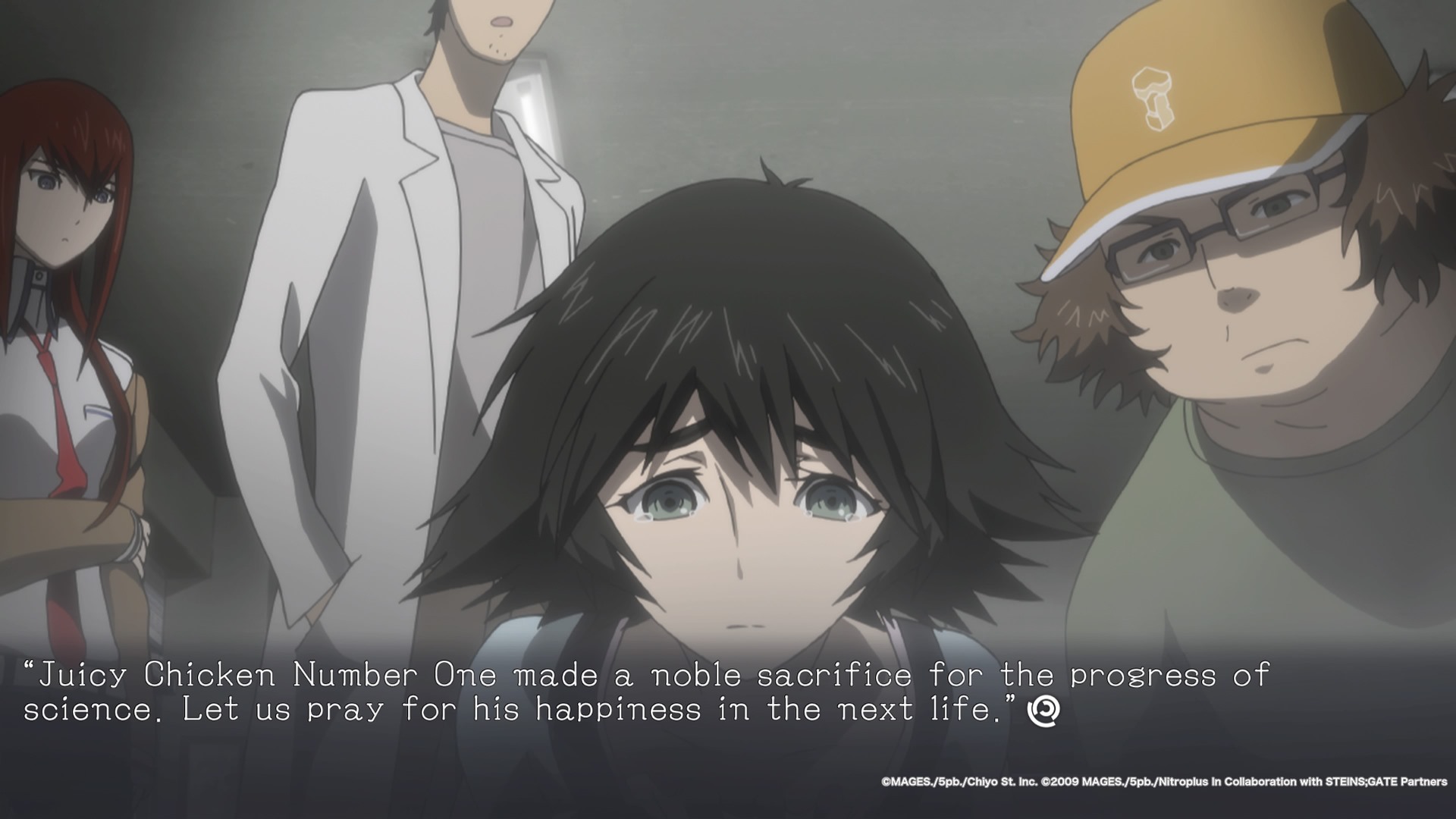
Steins;Gate Elite is an updated enhanced port of the original visual novel. The biggest new feature is the addition of scenes from the anime, which replaces the original visuals. Despite taking scenes from the anime, it’s not as if the whole game is fully animated. Rather, it’s still a visual novel at its core and so there is a lot of text. The text is accompanied by a static screenshot from the anime, with lip syncing and some animations to transition to the next piece of text. Thus there’s more movement here given that the characters and the scene will move as the story progresses. It’s done well and gives, what is basically the same game, a breath of fresh air. That said, the anime isn’t extremely detailed in its animation. One can say it is a step backwards in terms of the art direction when compared to the original.


The original game didn’t have many interactions, and there are even less here. This is a visual novel that is 95% reading, with only a few key choices in the story. In the original game, you could pull up the cellphone and poke around its menus, but even this is taken away now. Messages that are received by the phone automatically pops up to be read, and phone calls are automatically picked up. This isn’t great since you’ll be going through a scene when suddenly the phone screen pops up, which feels so random and out of place. At least the Tips section, which provides explanations on various terms that appear in the story, remains and is written well. It will give a clear explanation of the term when required, and in other times, there will be a healthy dose of pop culture or humor.


The key draw of the game is the story and this is arguable one of the best visual novels of all time. It’s a science fiction story about time travel but roots itself with real world concepts and theories, which gives it that extra authentic feel. The theories it pulls out and explains, are real, even if the usage of them is tweaked for the sake of the story. Unfortunately, the story has a slow opening, so that may put a lot of people off before they finally get to the meatier and more interesting part. The extra animation of this version helps a little but doesn’t completely remove that problem.


The story follows Okabe, who is a university student. He suffers from chunnibyou, whereby he puts on an act to satisfy his own delusions, although there is an important reason for this. The start of the story has Okabe attending a lecture about time travel with his ditzy childhood friend, Mayuri, when afterwards he experiences a hallucination and is left a bit confused once he returns home. He is joined by Daru, an expert hacker (and a stereotypical otaku), as well as Kurisu, a prodigy who has returned from America. The group, along with a few other supporting characters, will become involved in events concerning time travel. It explores the concepts in innovative ways.


After the shock revelation that is the end of the first chapter, the story will hook you in more and more until it doesn’t let go. The scientific theories and concepts come thick and fast as it tries to explain the phenomenon and it is at this point that you’d expect a shock revelation at the end of each chapter because… it does that. It blends in the humor in a natural way and manages to successfully swap from serious to silly, then back to serious, all within the same scene. The scenarios heavily explores the mentality and reality of time travel, along with the repercussions of going back to redo something again and again. You can see the side effects and how it eats away at you, it’s quite thought provoking.


There are times where the story stretches the believability of a few of the group’s feats, but that’s understandable and the story is good enough to make up for it. Each character has their own quirks, from Okabe’s delusions, Daru’s extreme otaku nature, and Mayuri’s naivety. While these traits can make them endearing and unique as characters, they’re also not the most likeable or realistic traits. The story can feel like it gets side tracked a lot but you don’t know that it is like that because it’s actually foreshadowing and setting up future events. Once it connects it all together a few chapters later, the payoff is massive and is immensely satisfying.


There are certain choices throughout the story that dictate which endings you will get and would have been irreversible if not for the plentiful autosaves that the game makes before every decision. Each of the endings rely on the player caring a lot for a specific character and for the most part, it succeeds. However, if you have played the original, then you will feel that this version rushes things a bit so that you don’t get to develop as heavy a bond as the original. The original spent a lot of time providing the backstory and setting up the scenario so that you were fully invested in it. this version has a much faster pace and feels shallower as a result.


Getting to the true ending is worth the effort and is best left for last after you have experienced all the other endings. This is because it will allow you to fully feel the same heavy emotions and responsibility that Okabe feels. The sacrifices that he has had to make and the way the world plays around with him by constantly throwing up new challenges, they’ll get to you. It is a powerful ending and one that manages to successfully wrap what you thought was a somewhat throwaway beginning of the game, and what seemed to be an unsolvable problem, into a neat conclusion. The way it bookends the story cements this as one of the best written visual novels ever. It makes the ending all the more sweet because you, as the player, and Okabe, the main character, has worked so hard and persevered through so much to earn this happy ending.


The length of the story depends entirely on your reading speed and whether you know what choices to make to get the endings in an optimal route. If you follow a walkthrough and read fairly fast, then it’ll take around 25 hours to complete. For most players, it will probably be upwards from 30 hours. Apart from the multiple endings, there isn’t anything extra once you have gotten the true ending. The PlayStation 4 version does come with a digital copy of Linear Bounded Phenogram, which is another whole game itself, so there’s plenty of story content.


Overall, Steins;Gate Elite is a fantastic visual novel and contains a great story. This is a perfect start for anyone keen to get into a meaty sci-fi story filled with compelling characters and fantastic writing. The reuse of the anime footage (with some significant tweaks as times), works well for what it was trying to achieve. However, given the choice, the original is probably better because it felt that this Elite version overlooks or omits a few things in its story flow, so that certain events aren’t as impactful.

-------------------------------------------------

For other game reviews, have a look at this page and this page.
(As an Amazon Associate I earn from qualifying purchases)

Saturday, August 5, 2023

Toy Review: Transformers Generations Legacy Evolution Hot Shot (Deluxe)


Review: 
#776
Name:  Hot Shot
Brand:  Transformers
Allegiance:  Autobot
Line:  Generations - Legacy Evolution
Year of Release:  2023
Size Class:  Deluxe (Wave 1)
Mold Status:  new

VEHICLE MODE:


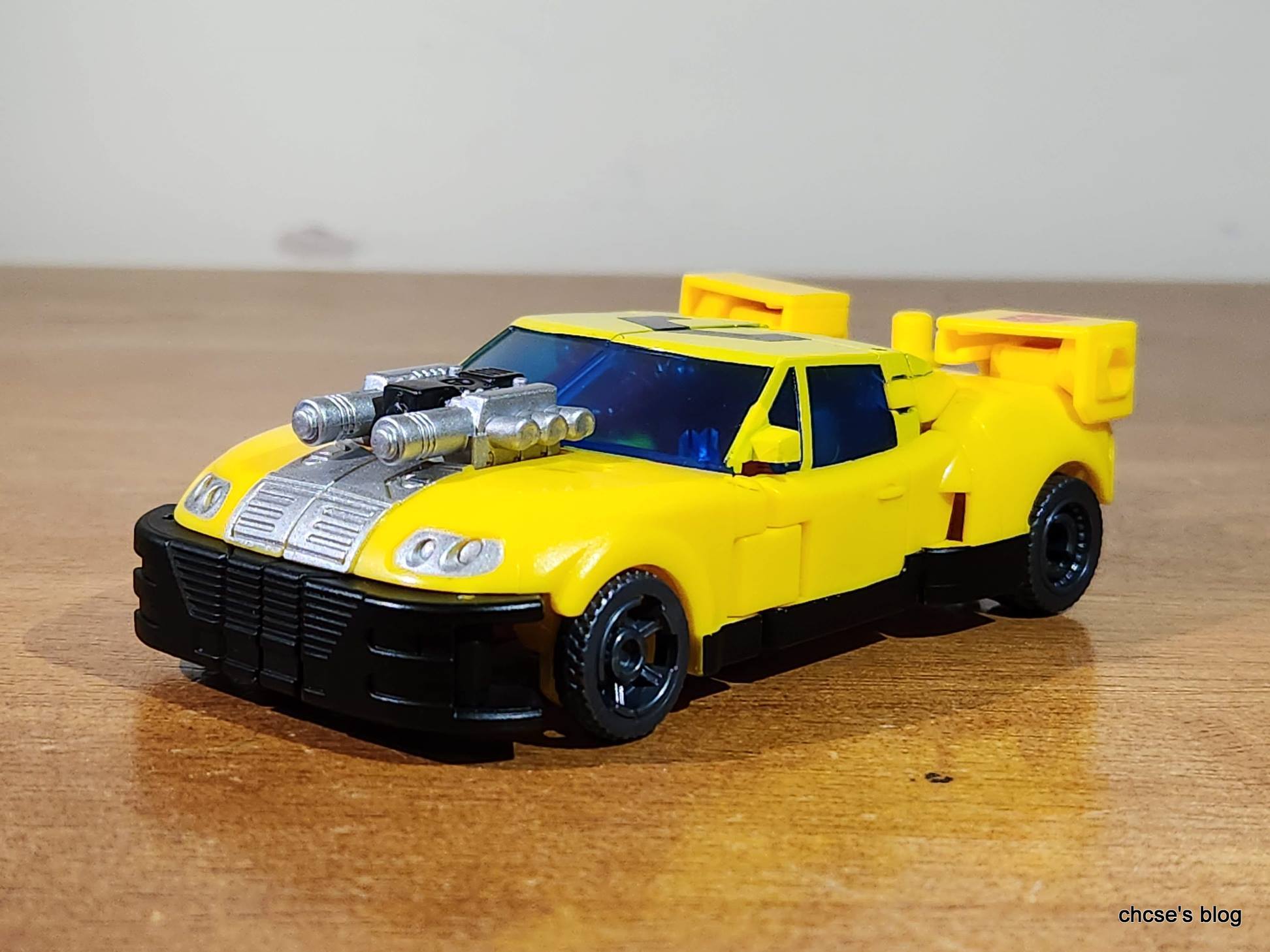
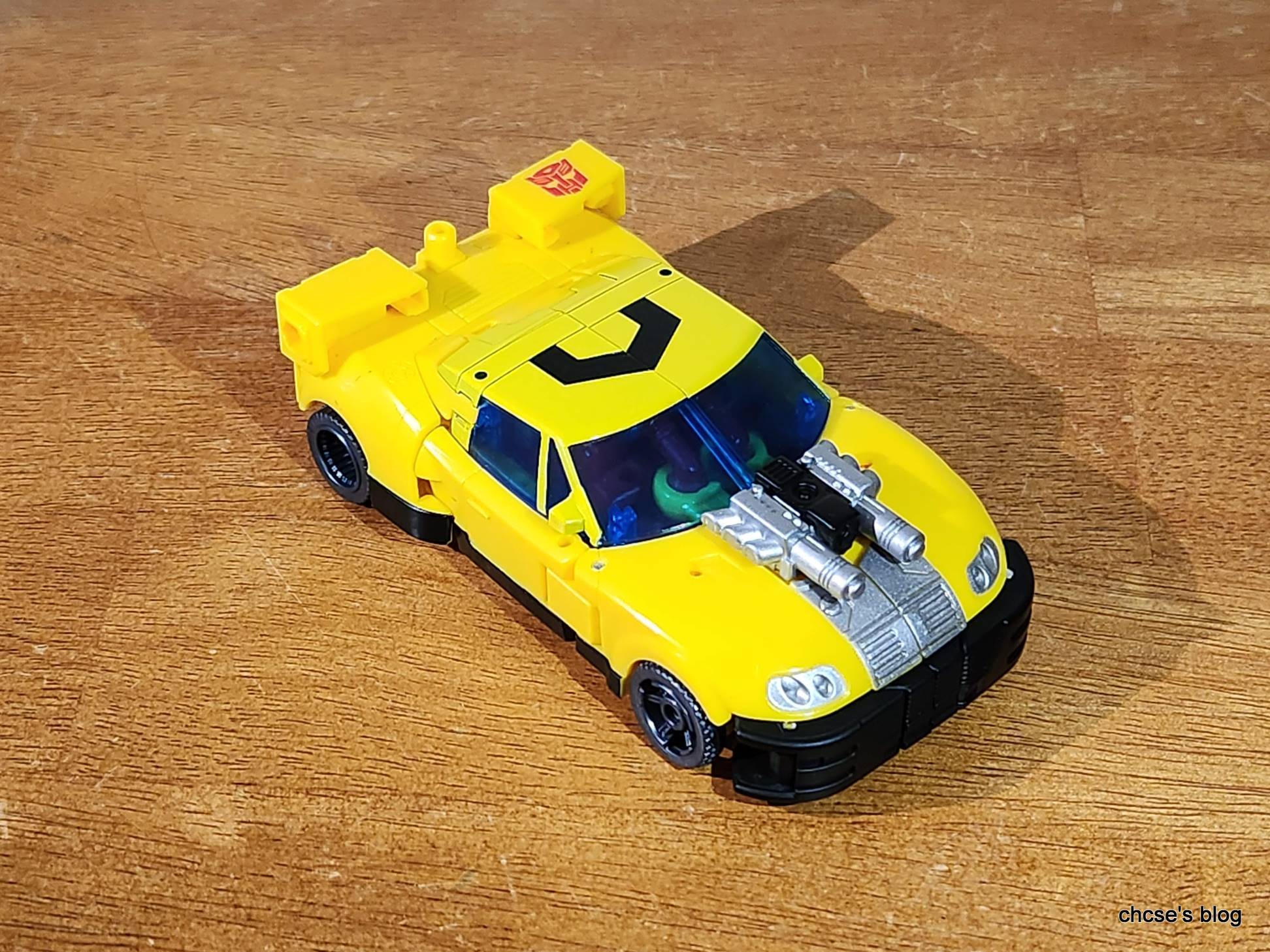
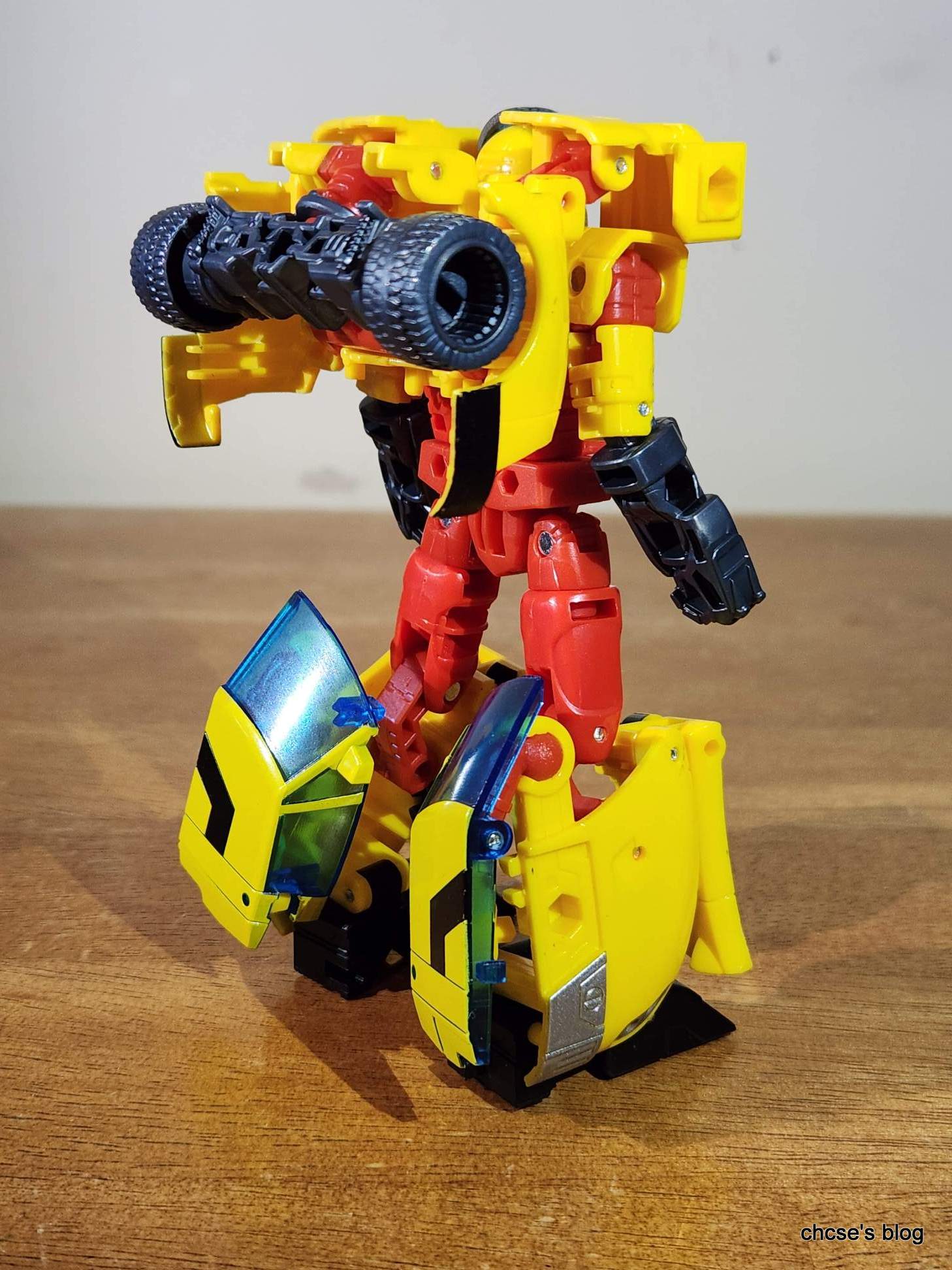
As an update to his Armada incarnation, Hot Shot transforms into a yellow sports car.


Unfortunately, this release does not include his Mini-Con partner Jolt (that was left for an exclusive release instead...), but he still retains the gap on his rear spoiler.


In terms of size, Hot Shot is fairly decent, he is shorter and lower than most other Deluxe vehicles, but also wider, so it evens out.


There is a little bit of a gap behind his front bumper but otherwise, this is a decent vehicle mode.


You can actually remove the engine block for a slightly smoother hood (well, as smooth as it can be with the recessed area).


There are no gimmicks here, but then again, the line isn't really focusing on gimmicks.

TRANSFORMATION:

A transformation with the complexity just right, so that he doesn't feel too finnicky or too unsatisfying.  The hood splits into two and rotates to form the legs.  The back folds up to become the robot's back.  The arms flip out from underneath and there there's just a little bit of shifting panels to move the roof away and flip out the head.

ROBOT MODE:


Hot Shot's robot mode is decent.  The character can be hard to create a figure of due to his transformation scheme, especially the shoulders.


He carries a fair bit of kibble, such as the rear of the vehicle on his back, but he has a good reason for this and it is accurate to the cartoon.


The head sculpt is good, and the face is well painted.


The visor isn't for show as it can flip down.


The front halves of the car forming his legs can be a bit chunky.


He is fairly short, above is a comparison against Siege Sideswipe.


Despite how his shoulders still looks so awkward, he has full range of articulation.  He has joints for his head, shoulders, elbows, waist, hips, knees and ankles.


The engine block of his vehicle is the weapon for his robot mode.


He can hold the weapon in either hand.


Despite the amount of kibble, Hot Shot is surprisingly nimble, although the way his ankle tilts are jointed can make them hard to reach.


The gun can peg onto the back when not in use.


He retains the awesome feature of the rear wheels and axel folding up to form a shoulder cannon.


Unfortunately, unlike the original toy, the cannon is neither springloaded nor does it have a missile.  Understandable given the budget these days.


A great update to a character that really needed it, since both the original toy and the 2008 Universe update had major flaws.

OVERALL:

Hot Shot is a fantastic update and he is a really fun figure to boot.  Both modes look like, and the fact that he retains the shoulder cannon gimmick in robot mode is awesome, and makes him a worthy update to the character.

----------------------------------------------------------

For other Transformers reviews, have a look at this page and this page.

(As an Amazon Associate I earn from qualifying purchases)
Wednesday, August 2, 2023

Captain Tsubasa: Rise of New Champions (PS4)


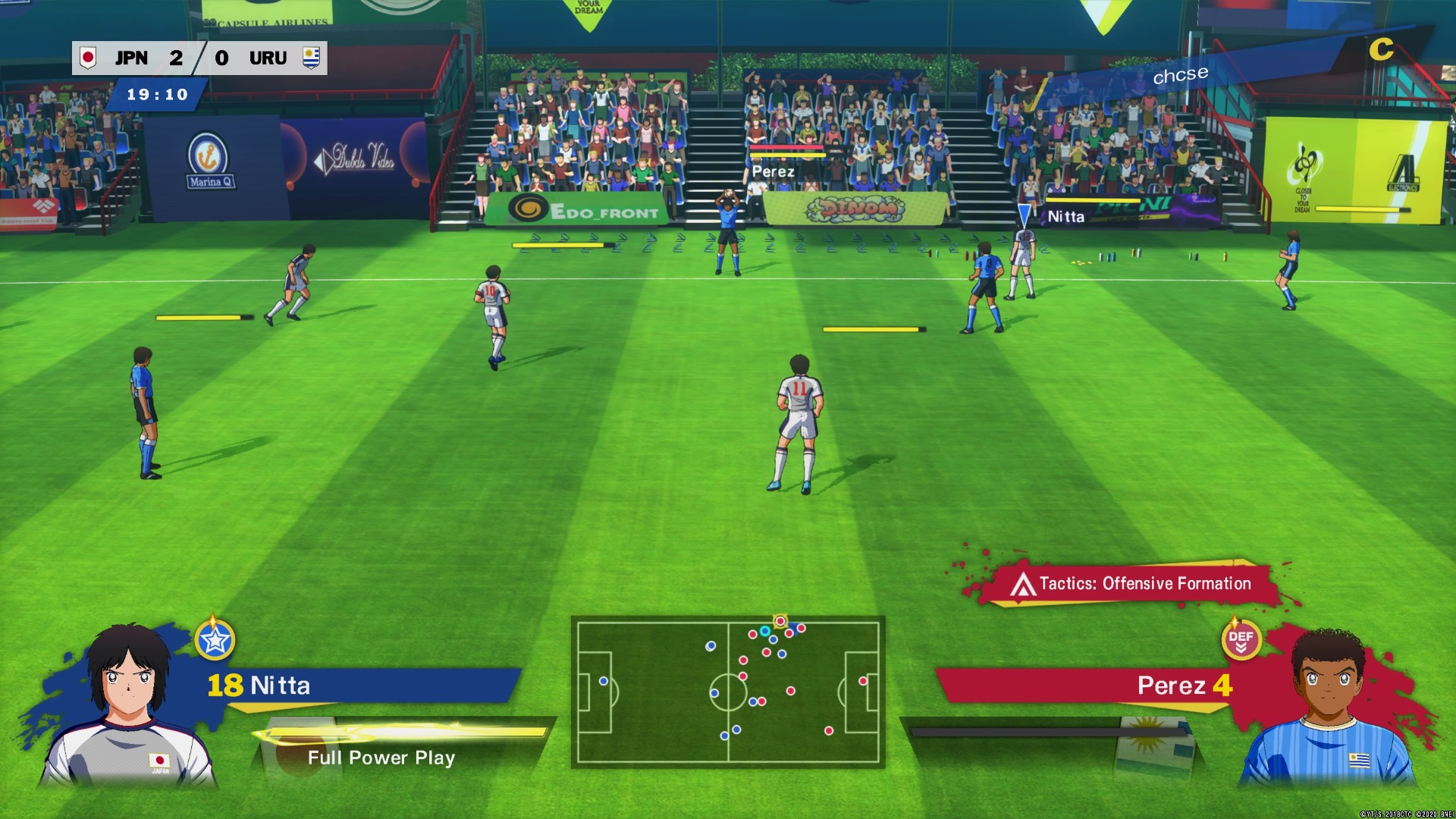
Captain Tsubasa: Rise of New Champions is an arcade soccer game based on the manga and anime series. specifically, it is based upon the 2018 anime that had retold the story up to the middle school nationals. Being on the PS4, the visuals are great, for an anime-inspired game that is. The game doesn’t have a great tutorial as it quickly zips through the basics, and it can be a struggle in the beginning to get the hang of things. Obviously, to win matches, your objective is to shoot more goals than the opponents. When a character has the ball, they can dribble, or they can dash dribble using the shoulder button. Using the trigger button will allow them to dodge. However, an opposing player can take the ball in one of two ways, and whether you use the shoulder or the trigger button to counter their defence will determine whether the character loses the ball or not. It takes some guesswork as you try and predict which button to use.


There are several ways to pass the ball, X for a short pass, Circle for a long pass and Triangle for a through pass. When you’re playing defensive and want to take the ball, the controls are largely the same, except you can dash up and hold X at the same time to take the ball, or use a tackle by using the trigger button. Again, the other player can dodge your attack by using the right combination (or the AI cheating). Finally, to shoot the ball, you press and hold down the Square button to charge a bar. While you can release it to shoot without filling it, it is in your best interest to do that because most characters have a special shooting move that’s much more powerful.


A huge part of the game ends up shooting as much as possible in order to whittle down the goalie’s stamina bar. It’s annoying because basically the higher it is, the less likely a goal will be achieved. Every time the goalie saves a goal, the bar drops down. It’s not a bad mechanic per se, since it is reflective of how real matches don’t have players constantly shooting goals, but on the other hand, shooting ball after ball to drop the bar down to almost being empty to get one through can be repetitive and tiring. There are other factors at play later on, including abilities and special shooting moves that will break this pattern, but still not enough to drastically change things.


The game is flashy, and you must accept that it is an arcade soccer game based on an anime that’s know for over-the-top impossible moves, like jumping high into the sky to shoot a goal. However, that’s what makes it so fun and crazy, putting a smile on your face. The game does a good job at capturing the iconic moves of the characters, and it will have mini cutscenes for the special shooting moves, and epic saves. The first time you see Tsubasa’s Drive Shot, or Tachibana’s Skylab Hurricane, will definitely put a smile on your face, especially if you have watched the anime.


The game has two main story modes, Episode Tsubasa and Episode New Hero. Episode Tsubasa is a retelling of the Middle School National tournament arc in which Nankatsu plays through seven matches, rising through the rounds of the tournament to win it. There are basic cutscenes, and it distils the story right down to its core, so you need to have had watched the anime to fully understand the significance of several of the events. The annoying part of this mode is how there are scripted events. During matches, a cutscene will forcibly wrestle control away from you, and have a team score a guaranteed goal, or your character having a guaranteed miss at a shot. On the one hand, it’s cool to see the iconic events, on the other, it’s frustrating when you have no control like this.


Episode Tsubasa doesn’t take long to finish given it is only seven matches. It’s around 3 to 5 hours long, depending on how quickly you can finish the matches. You may have to replay some since this mode acts as a longer tutorial, teaching you more advanced techniques like how to do one-two passes or how to shoot straight after a long pass. While these tutorials are optional, they are useful. The biggest negative is that it would have been better if the story could have either continued further or had followed the anime and covered the elementary school arc as well. It feels too truncated as it is and there was so much more content after this in the manga.


Episode New Hero is the main chunk of single player content as it is longer than Episode Tsubasa. You create a custom character, who is a newbie for one of the seven schools. It takes place after the National Tournament and there is a new Junior Youth national, where teams play against each other to win the right to represent Japan in a new tournament in America. The first part has you playing against all the other Japanese teams again. This mode can be annoying in that it raises the difficulty every time you win by a large margin, and drops it when you lose or draw. There is no way to disable this, or to select a constant difficulty that you’re comfortable with. It ends up being tedious as it feels unfair when the opposing team has better stats and outright keeps stealing the ball, or the goalkeeper’s stamina bar does not drop enough to score within the short time limits.


Episode New Hero has RPG elements where, depending on your performance in several areas during a match, your customized player will gain stats. Your position plays a part in which stats are easier to experience growth on. Items that you get from the card packs in the in-game shop, can be used to help such as increasing stat gains or increasing friendship points. There are events before and after every match, including friendship events. Once the mode gets into the Junior Youth World Challenge portion, the game finally breaks out of Japan. This part is where the story cutscenes come thick and fast, taking up to 15 minutes at a time. It also shows how outclassed the Japanese team is when they face off against other countries early on. It’s an underdog story and serves as a de factor continuation of the manga’s story, albeit in such a weird way of forcing the player character into the cutscenes.


Once you start playing against other countries, this is where the adaptive difficulty’s poor implementation rears its ugly head. There really needed to have been an option to disable it. The reason for it is that the developers were worried that it would unbalance the game due to the custom player’s stats tied to it, and the fact that you can use the custom player online afterwards. A simple solution to this would have been making some penalty to the stat gains instead to incentivise playing on higher difficulty, rather than just a blanket hard difficulty for all players. It’s annoying when the AI can anticipate and counter every single move you do, and it’s problematic when you first face against Italy, who already has an overpowered special move.


Episode new Hero takes around 6-8 hours to complete, depending on your planning, if you need to repeat any matches, and how quickly you can read to advance the cutscenes. Despite the flaws of the game, it’s still quite fun in the end and the ending is awesome. The epic feel is completed with the end credits playing a rendition of the anime’s theme song. In addition to the story modes, there is online where you play against others, and a mode where you just play for mode against the AI. The game tries to keep you returning via a daily login bonus, and as a result, the main menu always has you waiting several seconds before you can do anything as it connects to the network. This happens every single time, even when you enter a sub menu and then back out immediately. This is an absolute waste of time and extremely annoying and obnoxious.


Overall, Captain Tsubasa: Rise of new Champions is a fun arcade soccer game. It’s not the most in-depth but it has enough variety in its moves to spice things up a bit. However, due to the way the goal scoring works, most matches tend to end up with the player attempting goal after goal to whittle down the goalkeeper’s stamina bar before finally scoring. This can make matches predictable and tedious. The graphics are good and the game has gotten plenty of patches to iron out the bugs. If you’re a fan of the anime, or you’re looking for a less serious soccer game, this this is a fun experience.

---------------------------------------------

For other games reviews, have a look at this page and this page.

(As an Amazon Associate I earn from qualifying purchases)

Sword Oratoria (2017)

Sword Oratoria is a 12 episode spin-off to Is It Wrong to Try to Pick Up Girls in a Dungeon? You feel that it is supposed to follow Ais, th...