Showing posts with label ps4. Show all posts

Tuesday, December 19, 2023

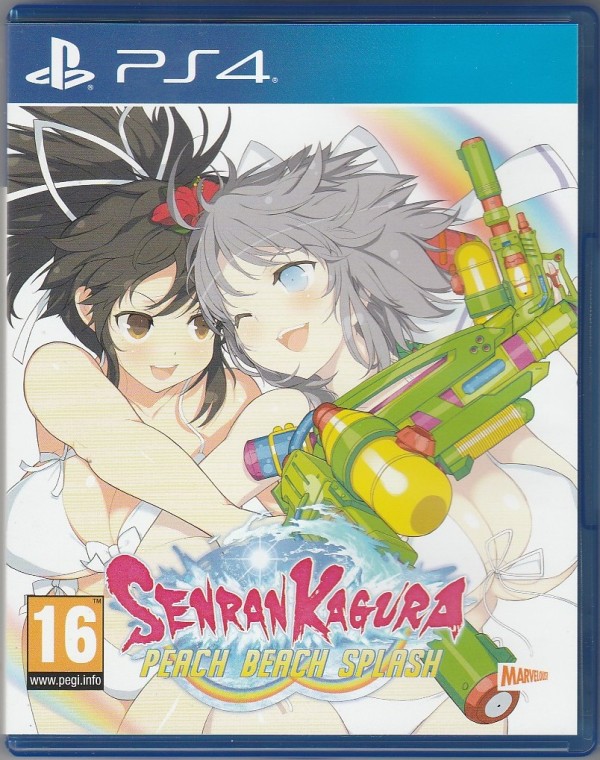
Senran Kagura: Peach Beach Splash (PS4)


Senran Kagura: Peach Beach Splash is a spin-off from the series. Instead of a hack n slash like previous games, this is a third person shooter, albeit one using water guns. As you can glean from the title, this is a pure fan service game where the characters are fighting on the beach in swimsuits. The setup is simple, and this is not a surprise given the series is not known for its story. Supposedly an ancient tradition for shinobi to battle it out in a competition on the beach using water guns, the Peach Beach Splash competition returns after getting all the characters from the different schools together to participate. There is supposedly a deeper, darker, reason for why this competition exists but you just need to know that the characters agreed to it, and they will all be wearing swimsuits firing water guns at each other.


Considering the genre change, the controls feel good. It has a stock standard third person shooter control scheme. You can quick toggle between manual aiming, or auto-locking onto an opponent (i.e. heavy aim assist). The slight twist here is that each character can use the water as jets to jump and stay high up in the air, which is really fun to do. They can also use the water to dodge and slide forward in high speed. Both manoeuvres aren’t mandatory in single player mode as the game is pretty easy overall. The ammo for each weapon is represented by four water tanks on the screen and you will need to reload by holding down the square button. This causes the character to crouch and slow down so you need to be careful and keep an eye on how much water is left.


Each character basically plays and controls the same. Their only point of difference is their melee attack, which is unique to each character but something you don’t really use that much. Each character has a loadout which is based upon the card system. Therefore, the gameplay differs only with what you have selected as your weapon, which ranges from assault rifles, pistols, shotguns, and rocket launchers. The card system allows different abilities to be equipped to a character, such as homing attacks, buffs, and debuffs. This means that there are randomized card packs that you get from completing the missions to unlock new cards, as well as an in-game shop. There are hundreds of cards in the game, and the rarer ones give better effects of the same ability. Any duplicates you get from card packs are used to level up existing cards and characters.


The gameplay ends up becoming hectic and chaotic, especially thanks to the water splashing effects where you hit and get hit. This is mostly a team-based game but unfortunately, the AI is terrible. During harder matches, especially on higher difficulties if you select them, the AI will die. In story mode, they will not automatically revive and since it takes time to revive them yourself, it is better not to do so because you would currently be the target of the enemies. The game tends to overwhelm you with numbers. It’s not fun when you are knocked down and it takes forever to get back up. This is especially egregious in boss battles where the objective is to defeat the boss, but there are unending spawns of mooks that get in the way.


The single player story mode tells the story from five different perspectives, basically one from each of the schools / groups. Each story arc has ten missions. Perhaps most disappointing is how quickly these matches go by, they usually take anywhere from less than a minute to five minutes. It feels like you are just getting into the groove of the match and then it ends. Many missions have you fighting against generic enemies and there are only one of two objectives, either defeat every single enemy, or put out some fires. Each story arc takes just a bit over an hour to complete, so there isn’t much time for any sort of story, and it is over too quickly. The story is told via text dialogues with the character models onscreen, so it’s not very engrossing either.


The structure of each story arc and its objectives to too similar to each other, so it will get repetitive. The boss battles aren’t designed too well and it keeps making the same mistakes. It generally has a boss that is situated high up in the end and then swarms you with enemies. Your teammates will struggle to stay alive and die. This means that the game is too reliant on the player having good skill cards to equip on everyone so that they can survive a bit longer. This isn’t great when you are playing story mode the first time through as you won’t have nice cards by that point. The level designs also require improvement. They are supposed to be complex stages with varying heights and paths. However, due to the gameplay favoring speed and chaos as everyone zips around, some parts of the stages feel too cramped. You’ll often find yourself blocked by the varying heights as you try and wrestle the controls to get back up to the platform you fell from.


You are expected to level up your characters, weapons, and skills over the course of the game. The problem is that if you are playing only the single player content, then you will not earn enough in-game money and get enough cards to level up to keep pace. Each level takes exponentially more duplicate cards, but you earn duplicate cards and in-game money as roughly the same pace across all ten missions in a story arc. This can me while the first difficulty is too easy, the next step up, and the one after, will become too hard to certain stages. There is a real amount of grind to leveling up the everything that you would like to use. Obtaining all the unique skill cards is also a mammoth task. You’ll probably lose interest with the game long before you even get close to 100%.


Once you are done with the main story, there are 50+ more missions that cover off some side stories. These are sillier in nature compared to the main story. Not as much effort was put into them though as each one basically has some text at the beginning (without any in-game models either), then you play five consecutive stages back-to-back, before some text at the end to cap it off. The last piece of single player content are four tournaments of increasing difficulty. You can play these using any characters for your team. These are lucrative in terms of rewards and they’re more fun in that it’s a deathmatch instead. Each battle has a time limit, and you need to get more KOs than the other team to win and progress.


In the beginning, you will feel that the UI layout needs a bit of work. what we got isn’t the best in terms of delivering the info you need at a quick glance. When the action is so quick and frantic, the last thing you need is slow down to check your health, or check where the enemy is, or what skill cards you have that are available to be used. You also run out of water (i.e. ammunition) relatively quickly so that you are constantly shooting and then reloading after one or two enemies, which slows the pacing down. The graphics are fantastic though with a bright and colorful palette. It uses this to its advantage when you down an opponent, there is an option to repeatedly splash them to reveal further scenes of fan service. There is also a separate mode where you can “interact” with any of the female characters, which is surprising that it managed to make it through to the final version of the game given how... controversial it can be.


Overall, Senran Kagura: Peach Beach Splash, is a fun spin-off to the series. The pivot from hack n slash to a third person shooter, but with water guns, actually works out really well here. The core game mechanics are fine and surprisingly good. It’s just that there are some nitpicks in the game design that can make it more annoying to play. The huge emphasis on random card packs to get better skills, and the sheer number of duplicate cards you need to grind to level up anything to a decent level, are the main pain points. The story has never been a strong suit of the series and it’s not great here, but it is enough to push you through so that you can enjoy the gameplay and fan service instead.

-----------------------------------------------

For other game reviews, have a look at this page and this page.

Tuesday, September 26, 2023

Tales of Vesperia: Definitive Edition (PS4)


Tales of Vesperia: Definitive Edition is a remaster of the game from the Xbox 360 and PS3 era. However, this uses the PS3 version that was exclusive to Japan, which had a ton of exclusive content. This is an action RPG and it is a familiar system for people who has played the Tales series. You control one character in a party of four, with the AI controlling the other three. Battles take place in a separate screen and the default has you running in a straight line to or from your target. You may also free-run around the arean by holding the trigger button.


There is a normal attack that can combo, and supplementing that is an artes button. Artes are either special moves or magic, that you can chain onto the end of a normal combo. The combat system can be similar to a fighting game in that you map different artes to a combination of the button press and a direction of the analogue stick. It’s fun and clever and once you’re able to get a feel of the system, it is also addictive. Being able to block and use items rounds out the combat system. The AI is customizable to a degree. You can set parameters and general behaviours, such as a specific character will use an item when HP is low, or another character will focus on healing. You can then set three pre-set strategies which you can change during battle.


The combat system can take some time to get used to, especially if you prefer faster combat mechanics. For some reason, your character has a long animation before and after every combo where they are vulnerable. What this means is that you are more than likely to be interrupted by enemies and it can be a frustrating experience. The worst part of the combat comes to the forefront in the battles where you are forced to fight solo against a group of enemies. It’s not a pleasant experience when you are being stunlocked to death. It rubs salt into the wound when some of these solo battles act as tutorials that you end up dying in and being forced to reload a save… and the game uses save points. There is no auto-save either so if you forgot to save for a while and die to an enemy or boss, then you will have to repeat everything again.


This is a classic JRPG so it has towns, dungeons and a world map. Its earlier 3D roots are evident given that the camera is fixed when exploring dungeons and towns. At least there are no random encounters as enemies will appear in the field. You can initiate a battle by running up again them, but sometimes it is impossible to avoid when the paths are so narrow. The graphics has aged well thanks to the anime style and the bright color palette. The game’s dungeons aren’t too big but they are designed in such a way that it often uses up a lot of your time solving “puzzles”. These puzzles boil down to pushing the right levers and then there’s the backtracking required. The only saving grace is that once you have defeated the enemies in a dungeon, they do not reappear on the map unless you exit and re-enter that screen.


The story follows Yuri, who is soon joined by a noble lady from the castle, Estelle. This is a world where there is something called blastia. The energy that blastia provides is crucial to society. Yuri ends up trying to track down a blastia core thief, while Estelle accompanies him as she wants to find a knight named Flynn, whom Yuri knows. They leave the city and end up traveling the world with other characters joining them in the process. It’s atypical JRPG story but one that isn’t bad and has a lot of good comedic moments.


Events can be a bit dark sometimes, which is a surprise considering that most of the game is bright and colorful like a typical JRPG. Yuri does a few things that are clearly not the “right” thing to do, even though his actions can be justified. This leads to the group having to work out their differences. While this may sound painful, it’s done in a way that isn’t overbearing, although there are a lot of plot threads that doesn’t get resolved in the game. The Tales series also has something called skits, which are smaller optional cutscenes using 2D portraits. These are great in that they add a lot to the character development, and are usually scenes that might not have fitted in if it was a proper cutscene.


This is a huge game. The story alone has hours and hours of cutscenes, but it also boasts a huge number of sidequests. These sidequests are usually broken into many smaller parts spread out across the game, rather than one long chain that you can do immediately. The game is infamous for a lot of these sidequests to be easily missable, so you really need to follow a guide if you wanted to see everything. There is a tendency for the game to constantly shuffle your party members. They come and go as they please when the story dictates and this can be annoying. The game compensates for this somewhat with a large cast of playable characters.


You’ll often be short of money and to get all the equipment, you will need to have drops from monsters in order to “synthesize” them. However, this is part of the addictive nature of the game as weapons and certain other types of equipment will have skills attached to them. These are passive abilities that you can permanently equip onto your character once they have used the equipment in enough battles. In this way, you can load many abilities onto your characters to improve them. The game has free DLC that you can download and use. Some of them are nice, such as addition money and costumes, while others not so as they make the game too easy. Things such as increasing your levels tends to ruin the first playthrough experience if you’re not careful.


The final dungeon can be slightly annoying and confusing as they are some environmental puzzles where you need to hit several things to open up new paths. The different screens can start to blend in with each other thanks to the similar layouts and style. The final boss was also fine but just felt somewhat anticlimactic, especially once you defeated him and you expected a long ending scene. It covers off the immediate threat but if you were expecting a full-on epilogue or something long to see how the characters were afterwards (since there were pretty drastic consequences from the final battle), then you’ll be disappointed.


The game takes around 40 to 50 hours to get to the end so this is by no means a short game. All the optional scenes and activities can give you additional hours of content but a lot of them requires rampant backtracking. The postgame content consists of reused dungeons to defeat enemies with swapped color palettes, with some new bosses spread throughout. There is a New Game Plus where you can spend the “grade” you earned during the game (which roughly correlates with how well you’ve played the game) for additional bonuses and things to carry over.


Overall, Tales of Vesperia: Definitive Edition is a great game and a classic JRPG through and through with all the genre’s good and bad. The bright colorful anime aesthetics means that it has aged remarkably well while the fast paced combat system is a lot of fun. The combat mechanics are deeper than at first glance and while it is a bit rough to start with, evolves into a finetuned system. The same goes with the story which starts off a bit slow but eventually the characters are developed enough that you’d love each of their individual quirks.

---------------------------------------------------

For other game reviews, have a look at this page and this page.

(As an Amazon Associate I earn from qualifying purchases)

Tuesday, September 19, 2023

Resogun (PS4)


Resogun is a side-scrolling shoot ‘em up, similar in spirit to the developer’s previous game series, Super Stardust, but slightly different. This is a pure arcade experience. The goal of each level is to survive and defeat all the enemies. Your ship can only move left or right, and thus can only shoot left or right. Enemies will swarm you in huge numbers so there are a few other abilities to improve your chances of survival. There is a bomb, which clears enemies from the entire field; there is an overdrive, which is a super attack that takes on the form of a plasma beam; and there is boost, which increases your ship’s speed allowing it to ram enemies. The bomb is limited by ammo, while the other two will slowly recharge after use.


There is an additional optional activity in each level, which plays into the backstory of the situation. You are in a combat simulation and are there to save humans. During the level, enemies that glow green, known as Keepers, will appear. By defeating these, it will free a human from their cage and you can then pick them up and save them by taking them to a safety point. Doing this will give you positive effects such as additional lives, bombs, shields, or points. It’s purely optional as you can still finish the level without saving any human.


This is a small game given that the single player mode only has five levels. Each level ends with a boss fight. The game can be challenging, although you can select how hard you’d want it to be given that there are four difficulties to choose from. There are three different ships, where each one has different parameters and attack patterns, so each of them plays a bit different compared to each other. One ship has a homing attack, while another can only shoot in a straight line, and the third shoots in a shotgun style.


On the standard or easier difficulty, you’ll be able to play through all the levels within two hours, which includes any retries if you died. As with a lot of this developer’s games, the fun comes from replaying each level as your skills improve to get higher and higher scores. The ending can come as abrupt since the final boss of the whole game feels just like the other bosses, and you were expecting the next stage to load up only to see the credits instead.


Once you’ve finished the five levels, there’s actually not much additional content outside of this single player mode. You can aim for a higher score, since it’s designed for you to try and beat all five levels in one go without dying. Thankfully, even if you do die, you can immediately retry that level and don’t have to start from the very beginning, which is very welcomed, especially on higher difficulties. The paid DLCs unlocks several new modes, and the game’s title screen teases these modes by showing them as options, only to ask you to buy the DLC when you try to play them.


The last thing to mention is that the graphics are great, especially in HDR thanks to all the flashy effects. Your shots, and the explosions that are caused when you kill an enemy, causes an impressive array of colors. Coupled with the fast paced soundtrack and smooth visuals, and this is a slick game that hooks you in as you get into the zone dodging all the projectiles and taking down everything in your path.


Overall, Resogun is a good game. The fast paced arcade styled gameplay is a perfect for a quick and fun experience. The biggest negative of the game is just how little content there is in the base game. It’s just five levels that you can easily finish within two hours in your first run, and even shorter in later ones as you improve your skills. Replaying the same levels can only keep your attention for so long, so if there were at least another five levels, that would have been great.

---------------------------------------------------

For other game reviews, have a look at this page and this page.

Tuesday, September 12, 2023

Stray (PS4)


Stray is a game where you play as a cat. It starts off introducing the cat that you’re going to be playing as, who is part of a group of four living in what looks like an overgrown abandoned set of ruins. The titular stray cat gets separated from the others and finds itself in a weird, abandoned city. At first you don’t know what happened, what this city is, or even when this game takes place. however, various hints are uncovered as the story progresses. The people that lived there seemed to have abandoned the city, living behind on the unusual machines and bugs to inhabit it.


The gameplay is simplistic. As a cat you can run and jump on surfaces, as well as push certain things around. A lot of the fun in the beginning is the novelty of playing as a cat but at its core, this game is too simple, and the controls can even feel clunky at times. For an indie game, it has impressive graphics. In particular, the design of the city perfectly captures how restrictive and claustrophobic it is. The addition of the large neon lights and signs add a cyberpunk atmosphere to the game that perfectly captures the abandoned nature of the city. The developers seemed to have realised that the smaller body of the cat may induce motion sickness to people who are prone to it, and so included an option to include a reticule.


The story is initially told via the visuals and environments, but eventually, you’ll come to see robots and then the dialogue appears. The dialogue bit can come off as disappointing as a unique aspect would be if it had managed to tell the story through visuals alone. The story itself is so so. It had all the ingredients to be an intriguing piece that is filled with the wonder of finding out what happened. Yet what happens in actuality is that you can soon piece together the history of the city and how it came to be in this state as it is something that has been done many times before. It’s a wasted opportunity.


After the novelty of playing as a cat wears off, the game becomes quite mundane as it boils down to some simple platforming and interactions with NPCs. There are some light puzzle solving, but these puzzles usually have obvious solutions. The biggest downside to the game is how the cat does not have any offensive abilities for a large portion of the game. This is understandable and would be fine if not for the fact that it has those sections where things will attack the cat, but there’s little you can do to defend yourself. It's annoying and the purpose of those sections is to make you feel the same panic as one would in that type of scenario, but it doesn’t translate into an enjoyable experience.


For a game with such a minimalist UI and gameplay, it does a good job at pointing you in the right direction. There are visual cues such as neon signs and lights that point to a specific direction. The level design is mainly linear, however, there is one part later in the game which is a bit more open with less guidance. You may get a tiny bit lost there at what you need to do in order to progress the story.


The game is very easy, with the combat and stealth sections being simple and obvious. It is weird how much the game changes when you compare the first half to the second half. The first half had a different one where it was more bleak, and you had these aggressive enemies threatening to devour the cat. Then in the second, it’s intense in a different way, as the enemy is now non-organic, and everything takes on a more processed, cold feel to it. The disappearance of one enemy type only to be replaced by another feels at odds with each other. The ending itself is predictable and it takes less than four hours to get to it, even in your first playthrough.


There are some sidequests throughout the game. These usually involving you finding some collectibles to return to an NPC. These sidequests are missable because if you progress too far into the story, you cannot return those areas unless you go via Chapter Select. It’s not a huge deal but it’s points like these that can make the game’s generic nature come to the forefront. There are also a bunch of optional things that the cat can do, such as meowing and scratching things, which adds to the atmosphere, rather than to the substance of the game.


Overall, Stray is an okay game. The biggest appeal is playing as a cat and seeing all the effort that has been put into its animations. After that surface level appeal has been satisfied, you can see that the game is overly simple and repetitive. The story is fine but despite not being too original, there are enough intriguing things to keep your interest in finding out more about it. the other impressive element of the game are the graphics given that this is an indie title, but that’s about all that the game has going for it. It’s still a worthwhile play, but just that it did not really utilize all of its potential.

---------------------------------------------------

For other game reviews, have a look at this page and this page.

(As an Amazon Associate I earn from qualifying purchases)

Tuesday, September 5, 2023

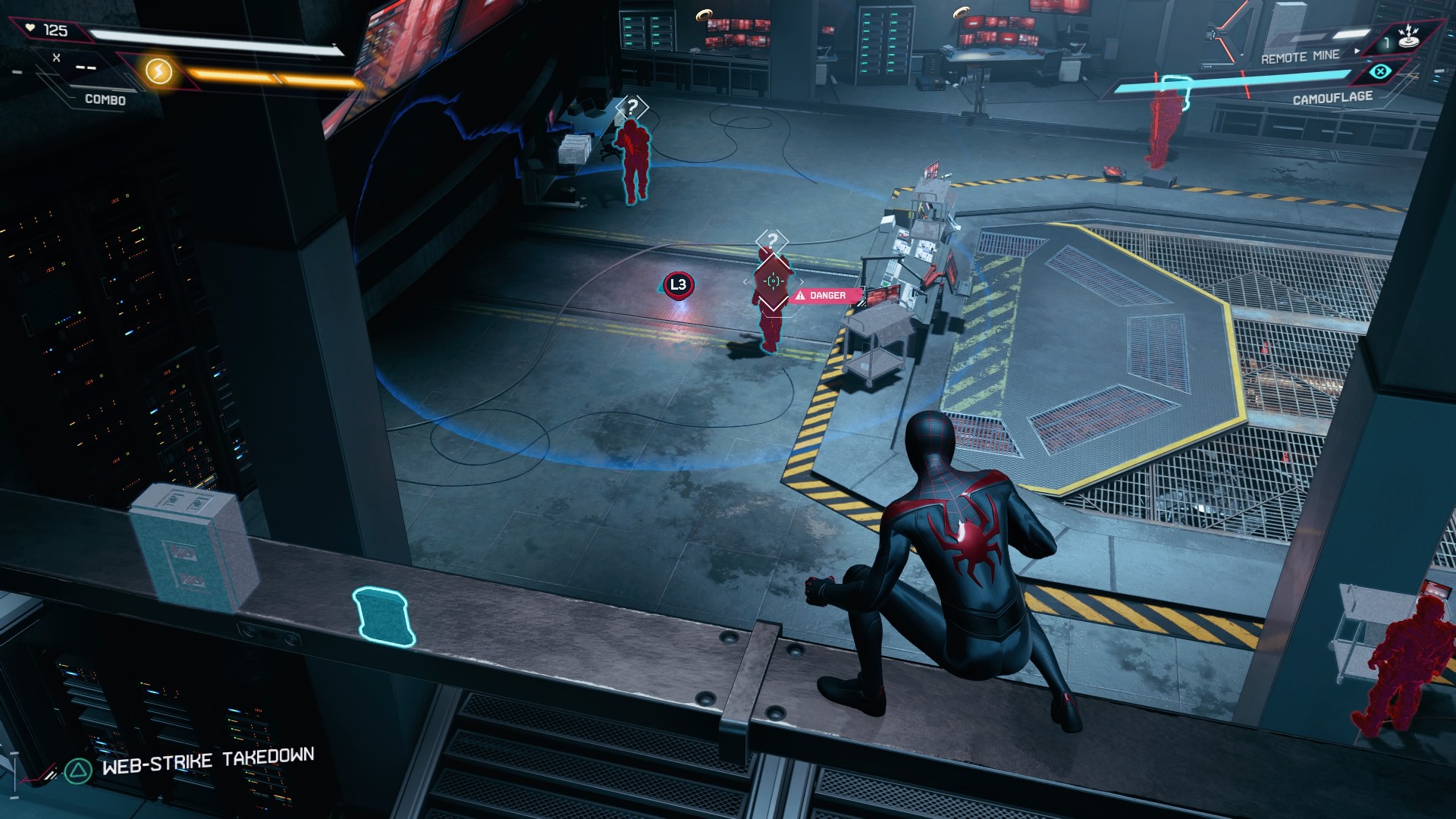
Marvel’s Spider-Man: Miles Morales (PS4)


Marvel’s Spider-Man: Miles Morales is a spin-off sequel to Marvel’s Spider-Man. This game stars Miles Morales and it is a smaller scaled game with a much shorter story. The first game showed how Miles gained his powers and then confiding to Peter about it. Here, in this game, he is already established as a second, younger, Spider-Man that the public knows about. The story is set up when Peter goes on vacation and thus Miles is the only Spider-Man looking after New York. Of course, it just so happens that Miles encounters a villain that he needs to stop.


The game plays near identically to the first game. Miles has plenty of acrobatic moves with the iconic web-slinging ability taking front and centre. The web-slinging is just as much as the original, and just as impressive. It’s so fun that you usually don’t use the fast travel and instead travel to your destination using the long way. Miles can easily climb and run on walls. The combat is a combo based system where you chain together attacks and moves. Spider-Man will automatically strike the closest enemy. His webs and other gadgets aid in combat.


Dodging plays a big part in the game as you constantly need to be moving. If you successfully perform a perfect dodge, you’ll stun the enemy and refill some of the bar that is needed to use his powers for. The biggest differentiator of Miles as Spider-Man is that he has Venom powers. These are special attacks that he uses his bio-electricity for. There is a light RPG touch to the game where Miles gains experience points as he beats his opponents, completes quests and does other things. He uses them to level up and gain skill points to unlock new skills and additional effects for his existing powers. As he progresses the story, he also unlocks new suits and new gadgets that he can use.


Finally, Spider-Man has a suite of stealth abilities although they’re not that varied. It doesn’t give you a ton of options, but they’re not a pitiful selection either. It’s something that meets you halfway as it isn’t a huge focus of the game. There are plenty of sections where it is designed to be cleared using stealth but if you cannot be bothered, or aren’t good at it, you can always try your luck at brute forcing it by fighting and knocking out all the opponents. This is usually the harder approach given that the enemy swarms and outnumbers you. The game has plenty of simple puzzles that usually just involves scanning the environment to see what items needs to be pulled. Even if you are stuck, you’ll get a hint from the characters within seconds.


Miles is younger than Peter and this plays out well in terms of the way he speaks and acts. This also affects how the game plays out since combat is flashier thanks to the Venom powers. Even though the combat is functionally identical, it feels more fun thanks to the focus on style. The music is also another area where it is similar to the first game but adds a unique twist to suit Miles. It’s surprisingly good and memorable. The track that plays when Miles is swinging in the city is suitable episode thanks to its mix of orchestral and electronic.


This is a short game and it shows in the story where the pacing is extremely fast. It is set piece after set piece, which ends up working well. It’s constantly exciting and the visual spectacles are a treat. The story is simple and predictable as it doesn’t even try to hide its reveals, although it still manages to be enjoyable as you watch Miles struggle to be Spider-Man. He has to go through the save things as Peter such as juggling both his personal and superhero responsibilities. The short nature of the game also means that you’re constantly leveling up and unlocking new abilities and perks.


It’s not so much an origin story for Miles rather than one that just explores his past and his current. We learn a lot more about him, his friends and the environment that he grew up in. The climax of the game keeps upping the pacing with some fun boss battles sprinkled throughout. Again, it is the visual spectacle of the game that really impresses you and while the game runs fine most of the time, it did chug in the finale. The main story is only around seven hours long but this can be seen as a positive as the game does not get stale or even come close to overstaying its welcome. After the story, you can free roam and finish off all the side activities as well as starting up a New Game+, which allows you to bring over all your unlocked abilities and gadgets.


There are plenty of sidequests in the open world of New York. There are the standard collectibles but there are also the scripted sidequests, which has more effort put in given that they have some story elements behind them. When traversing the city, it is easy to get distracted since you end up encountering these optional things so effortlessly and naturally, that it doesn’t feel like a chore when you complete it. It’s also refreshing to see the number of suits that you can unlock without it being locked behind DLC or microtransactions.


Overall, Marvel’s Spider-Man: Miles Morales is a fun and enjoyable short side game to the series. If you understand that it is supposed to be short and is not aiming to reinvent anything, then you will have a great game. The fast pacing, the small new additions, and the flashy visuals and choreography makes this game a blast to play. Unfortunately, these same factors also mean that the story will feel overly familiar as it doesn’t try anything new, but it is strong enough to provide an excuse to play the game and progress the story.

---------------------------------------------------

For other game reviews, have a look at this page and this page.

(As an Amazon Associate I earn from qualifying purchases)

Tuesday, August 29, 2023

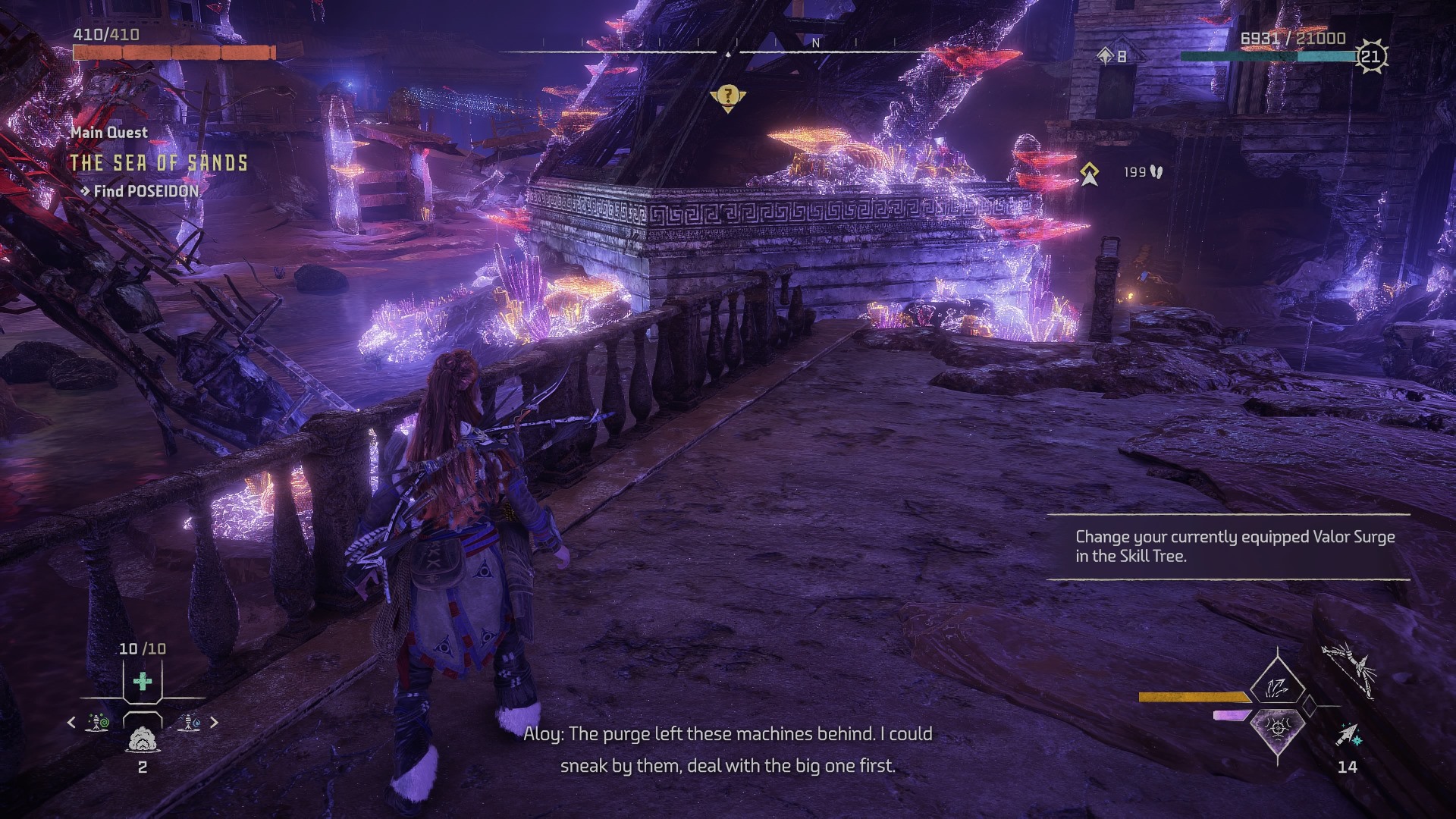
Horizon Forbidden West (PS4)


Horizon Forbidden West is the sequel to Horizon Zero Dawn. The start of this game heavily references the story events from the first game. While you can get the general idea, newcomers will probably feel lost and detached. The game will be familiar to returning players so it can feel samey at times. This is a third person action adventure where Aloy has melee attacks with her spear. However, her main form of attacking will be her other weapons, such as her bow and arrow and slingshots. There are different types of ammo, dealing a different type of damage such as acid, flames and frost.


The key draw of the game is of course the combat against the machines, that usually take on the form of a dinosaur or prehistorical animal. If you don’t want to face them head on, you can also go for stealth as Aloy has a set of stealth abilities. These include the ability to make traps, cause distractions and ways to attract machines to a location. A lot of the encounters can be done via stealth, head-on attacks, or a combination of both. On higher difficulties, facing them head-on will be difficult unless you had already lowered their numbers via stealth first.


All of Aloy’s weapons and abilities can be upgraded and unlocked via a number of skill trees. Experience is earned from defeating machines, completing quests, and hunting wildlife. It can be an addictive loop although this is something we have already seen plenty of times before. Aloy herself is nimble with plenty of parkour moves. She can jump, climb, shimmy and swing with the best of them. However, the parkour system still needs some work as there are kinks where Aloy doesn’t grab a hold of something, or doesn’t reach for the thing that you were aiming for. When she falls down and you have to start again, it can be annoying. She has a glider now to help with traversal and a key piece of equipment is her focus. This is a triangular piece of machinery clipped on her eye and is an excuse to present an informative UI that highlights points of interest for the player such as showing a machine’s weak point.


Despite the improvements, there remains a few frustrating elements. No matter how much the game handholds you or have Aloy make an obvious remark on what to do or where to go after a few seconds of looking around, there are some parts where it is still not immediately obvious. There are also poorly designed boss battles where it can be annoying as you are trapped in a small area facing against a human opponent. Yet they are invulnerable so that you must do something else. This wouldn’t be so bad except that they are constantly attacking and stunning you without a care in the world. Aloy herself is also over confident in the beginnings of the game, to the point of being arrogant and rude to a lot of people that she meets. She ends up coming off as impatient since she has more knowledge but doesn’t spend the time to try and convince the other party.


There is a huge amount of variety in the design of the machines this time around. In addition to all the ones from the first game, there are plenty of new designs, a lot of which you immediately encounter in the beginning of the game. It can get overwhelming at first but also gives you back some sense of discovery and accomplishment that was evident in the first game. The platicky look of the characters are gone. While it’s still not the most amazing facial designs ever, it is much more natural. The graphics remain stellar and impressive. It also includes a lot of accessibility options so that you can customize and tailor the game’s difficult and controls to your liking. The music is notable and provides the perfect amount of ambience and atmosphere to the game.


Like the first game, the story is a slow-burn. This is the main draw of the game though but it doesn’t hit the highs that you were hoping for. Given that the gameplay has remained largely the same, Forbidden West can feel overly familiar and even a bit boring as it doesn’t seem to do anything daring to push the formula forward. Everything works and mechanically, the game is fine with no significant weaknesses. Yet it is lacking that fresh feeling, especially when it is yet another open world game filled with collectibles and the same boring sidequest designs. What doesn’t help is that the game’s design encourages grinding, and it’s heavy grinding. There’s the big skill tree, and every weapon has multiple levels requiring differing types of rare drops. It’s tedious and slows down the game too much.


The story is interesting once it gets to the point where there is a big revelation. While it can originally feel cheesy, especially with the attitude and design of some of the characters, they present an interesting potential and facet to the grander scheme of things. Unfortunately, the story then basically boils down to being a gigantic fetch quest where Aloy has to explore the Forbidden West to find objects that will allow her to complete the thing that finally pushes the story forward, and to confront the villains. When the story finally picks up towards the end of the game, it means that only the final act has the meaty plot developments. This can come off as being too late. It can be unfair to constantly compare this game with the first, given that the original was focused on uncovering a big mystery, whereas this one is pushing the concept forward. Still, it felt like the developers squandered the potential and wasn’t totally satisfying.


The game is long, especially if you play a lot of the side content. The main story is only around 20 hours where it starts off slow but ramps up a bit towards the end with a few juicy tidbits. The ending teases what the future could be and that the series is definitely continuing, one way or another. After the story, you can continuing finishing the sidequests, finding all the collectibles, and exploring the vast open world. The open world is massive, containing all the staples you’d expect like forests, deserts, open water, mountains and caves. It’s just that the content is nothing special as it’s the usual open world filler.


Overall, there’s no denying that Horizon Forbidden West is an expansive, polished, and impressive game. However, it lacks the charm and sense of wonder that Zero Dawn had. A sequel should improve on everything, which this game mostly does, but also introduces enough new elements to keep the experience fresh, which is the area that it ends up lacking in. the gameplay mechanics and gameplay loop are too samey, especially considering the glut of open world games nowadays and unfortunately, unlike the first game, the story in this one wasn’t enough to hold it up. It’s still a worthwhile experience, just that expectations may have been a bit high after the first one.
-----------------------------------------------

For other game reviews, have a look at this page and this page.

(As an Amazon Associate I earn from qualifying purchases)

Sword Oratoria (2017)

Sword Oratoria is a 12 episode spin-off to Is It Wrong to Try to Pick Up Girls in a Dungeon? You feel that it is supposed to follow Ais, th...