Showing posts with label games. Show all posts

Tuesday, December 19, 2023

Senran Kagura: Peach Beach Splash (PS4)


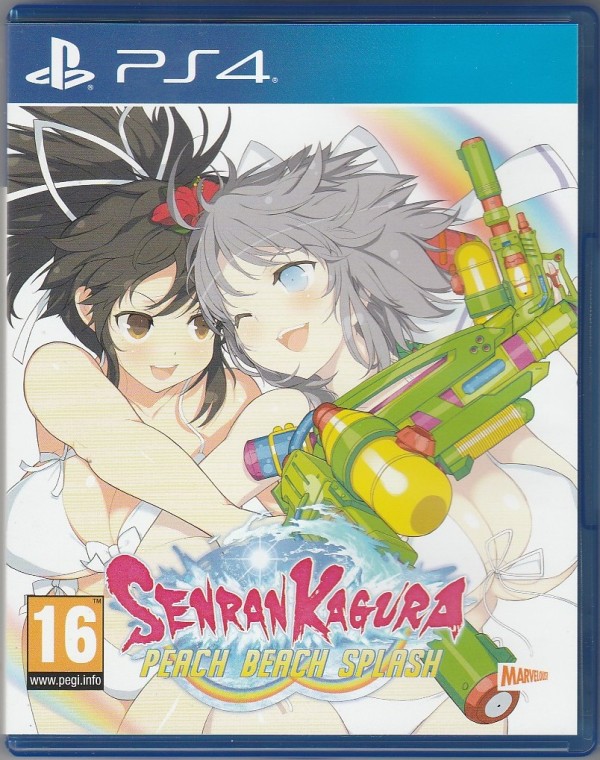
Senran Kagura: Peach Beach Splash is a spin-off from the series. Instead of a hack n slash like previous games, this is a third person shooter, albeit one using water guns. As you can glean from the title, this is a pure fan service game where the characters are fighting on the beach in swimsuits. The setup is simple, and this is not a surprise given the series is not known for its story. Supposedly an ancient tradition for shinobi to battle it out in a competition on the beach using water guns, the Peach Beach Splash competition returns after getting all the characters from the different schools together to participate. There is supposedly a deeper, darker, reason for why this competition exists but you just need to know that the characters agreed to it, and they will all be wearing swimsuits firing water guns at each other.


Considering the genre change, the controls feel good. It has a stock standard third person shooter control scheme. You can quick toggle between manual aiming, or auto-locking onto an opponent (i.e. heavy aim assist). The slight twist here is that each character can use the water as jets to jump and stay high up in the air, which is really fun to do. They can also use the water to dodge and slide forward in high speed. Both manoeuvres aren’t mandatory in single player mode as the game is pretty easy overall. The ammo for each weapon is represented by four water tanks on the screen and you will need to reload by holding down the square button. This causes the character to crouch and slow down so you need to be careful and keep an eye on how much water is left.


Each character basically plays and controls the same. Their only point of difference is their melee attack, which is unique to each character but something you don’t really use that much. Each character has a loadout which is based upon the card system. Therefore, the gameplay differs only with what you have selected as your weapon, which ranges from assault rifles, pistols, shotguns, and rocket launchers. The card system allows different abilities to be equipped to a character, such as homing attacks, buffs, and debuffs. This means that there are randomized card packs that you get from completing the missions to unlock new cards, as well as an in-game shop. There are hundreds of cards in the game, and the rarer ones give better effects of the same ability. Any duplicates you get from card packs are used to level up existing cards and characters.


The gameplay ends up becoming hectic and chaotic, especially thanks to the water splashing effects where you hit and get hit. This is mostly a team-based game but unfortunately, the AI is terrible. During harder matches, especially on higher difficulties if you select them, the AI will die. In story mode, they will not automatically revive and since it takes time to revive them yourself, it is better not to do so because you would currently be the target of the enemies. The game tends to overwhelm you with numbers. It’s not fun when you are knocked down and it takes forever to get back up. This is especially egregious in boss battles where the objective is to defeat the boss, but there are unending spawns of mooks that get in the way.


The single player story mode tells the story from five different perspectives, basically one from each of the schools / groups. Each story arc has ten missions. Perhaps most disappointing is how quickly these matches go by, they usually take anywhere from less than a minute to five minutes. It feels like you are just getting into the groove of the match and then it ends. Many missions have you fighting against generic enemies and there are only one of two objectives, either defeat every single enemy, or put out some fires. Each story arc takes just a bit over an hour to complete, so there isn’t much time for any sort of story, and it is over too quickly. The story is told via text dialogues with the character models onscreen, so it’s not very engrossing either.


The structure of each story arc and its objectives to too similar to each other, so it will get repetitive. The boss battles aren’t designed too well and it keeps making the same mistakes. It generally has a boss that is situated high up in the end and then swarms you with enemies. Your teammates will struggle to stay alive and die. This means that the game is too reliant on the player having good skill cards to equip on everyone so that they can survive a bit longer. This isn’t great when you are playing story mode the first time through as you won’t have nice cards by that point. The level designs also require improvement. They are supposed to be complex stages with varying heights and paths. However, due to the gameplay favoring speed and chaos as everyone zips around, some parts of the stages feel too cramped. You’ll often find yourself blocked by the varying heights as you try and wrestle the controls to get back up to the platform you fell from.


You are expected to level up your characters, weapons, and skills over the course of the game. The problem is that if you are playing only the single player content, then you will not earn enough in-game money and get enough cards to level up to keep pace. Each level takes exponentially more duplicate cards, but you earn duplicate cards and in-game money as roughly the same pace across all ten missions in a story arc. This can me while the first difficulty is too easy, the next step up, and the one after, will become too hard to certain stages. There is a real amount of grind to leveling up the everything that you would like to use. Obtaining all the unique skill cards is also a mammoth task. You’ll probably lose interest with the game long before you even get close to 100%.


Once you are done with the main story, there are 50+ more missions that cover off some side stories. These are sillier in nature compared to the main story. Not as much effort was put into them though as each one basically has some text at the beginning (without any in-game models either), then you play five consecutive stages back-to-back, before some text at the end to cap it off. The last piece of single player content are four tournaments of increasing difficulty. You can play these using any characters for your team. These are lucrative in terms of rewards and they’re more fun in that it’s a deathmatch instead. Each battle has a time limit, and you need to get more KOs than the other team to win and progress.


In the beginning, you will feel that the UI layout needs a bit of work. what we got isn’t the best in terms of delivering the info you need at a quick glance. When the action is so quick and frantic, the last thing you need is slow down to check your health, or check where the enemy is, or what skill cards you have that are available to be used. You also run out of water (i.e. ammunition) relatively quickly so that you are constantly shooting and then reloading after one or two enemies, which slows the pacing down. The graphics are fantastic though with a bright and colorful palette. It uses this to its advantage when you down an opponent, there is an option to repeatedly splash them to reveal further scenes of fan service. There is also a separate mode where you can “interact” with any of the female characters, which is surprising that it managed to make it through to the final version of the game given how... controversial it can be.


Overall, Senran Kagura: Peach Beach Splash, is a fun spin-off to the series. The pivot from hack n slash to a third person shooter, but with water guns, actually works out really well here. The core game mechanics are fine and surprisingly good. It’s just that there are some nitpicks in the game design that can make it more annoying to play. The huge emphasis on random card packs to get better skills, and the sheer number of duplicate cards you need to grind to level up anything to a decent level, are the main pain points. The story has never been a strong suit of the series and it’s not great here, but it is enough to push you through so that you can enjoy the gameplay and fan service instead.

-----------------------------------------------

For other game reviews, have a look at this page and this page.

Tuesday, December 5, 2023

Minecraft Dungeons (PC)


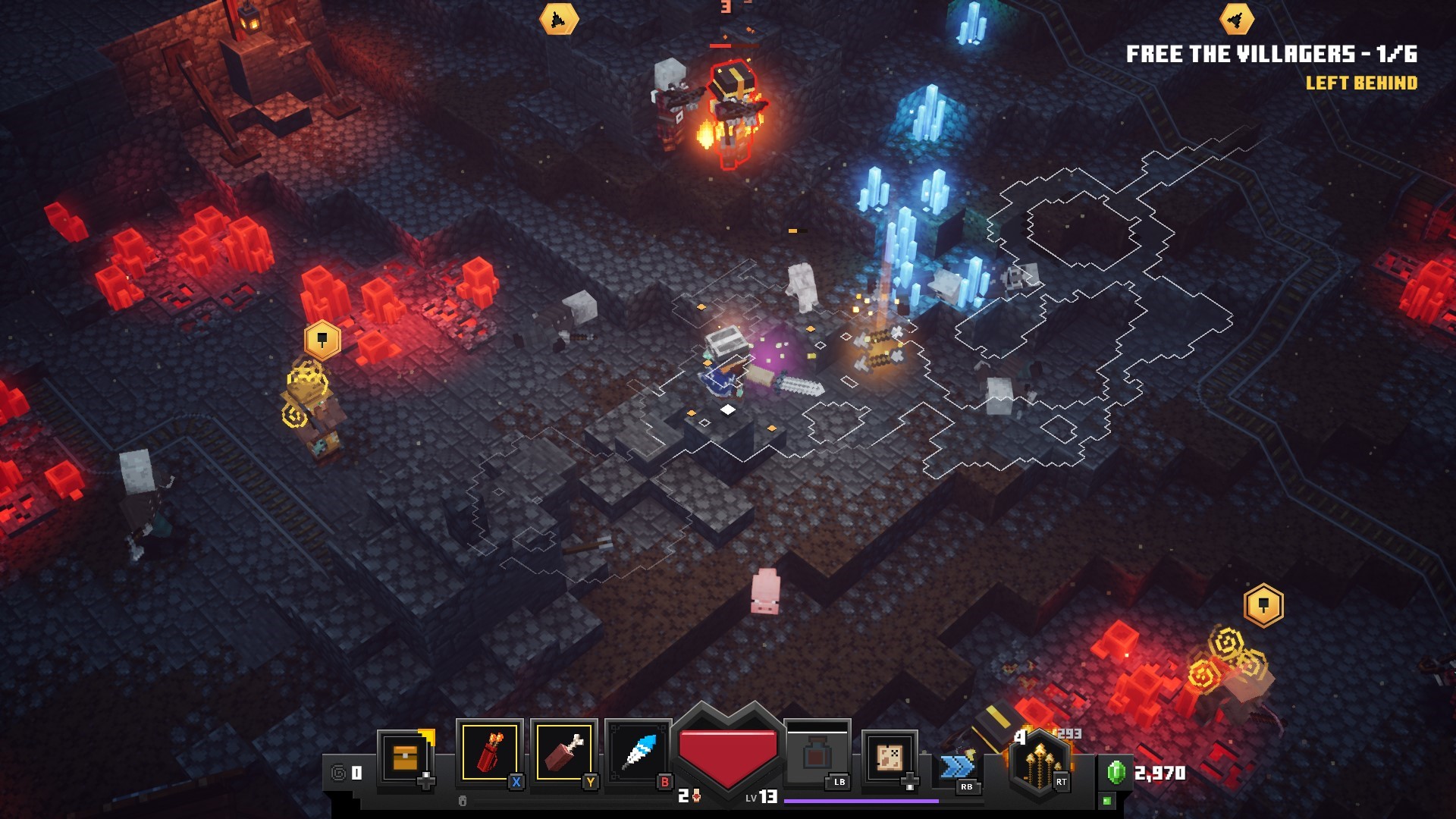
Minecraft Dungeons is a spin-off from Minecraft. It is an action hack and slash with the loot system at its central core gameplay loop. The graphics are based off the blocky aesthetics that you’d expect from the Minecraft name. The story and setup are quite simple. In the past, an adventurer was looked downupon and they become the big bad linear, known as the Arch-Illager. He was willing to take over the world and was using monsters to aid in his conquest. You play as the plucky new adventurer, where you just might be the one to bring the Arch-Illager down. That’s all for the story as it gives you just enough of an excuse to fight through the various dungeons. Apart from the beginning and ending cutscene, the rest of the story is told via some voiceovers at the beginning and each of each level.


The gameplay is simple, and it suits the theme since this is like a “lite” version of something like Diablo. When you’re controlling your character, they can swing their current weapon. The attack style changes depending on which weapon you have equipped. The character can dodge and there are also three slots that are hot-keyed to the remaining three face buttons. These are your abilities and will depend on what item you have equipped into that slot. Thus, there is a degree of flexibility in adapting to your playstyle. That’s all there is to the game and again, it is a simple premise, but it works. Ultimately, the combat can get repetitive as you work through the dungeons.


The maps are procedurally generated, which can be good and bad. It’s good in that it is something different each time you play through the game but bad in that it can feel too generic as it lacks interesting detours and secrets. It’s not unique to this game as these are always the flaws of a procedurally generated game. The many short dead ends with nothing at the end can be annoying. The levels will eventually become quite big and more like a maze. You will most likely pull open the map and rely on it all the time if you don’t want to spend your time getting lost. It’s a shame given that the in-game map is one that spreads out in front of you taking over a lot of the screen, rather than something more akin to a mini-map in an upper corner. That said, the game makes it easy to know where you need to go to get to the next objective, it’s just if you wanted to explore everything then you would want the map on all the time.


The game’s camera is fixed in an isometric view. While it does its best in removing the buildings and structures that block your view, there are often times where you can’t see what is behind something and just have to blindly mash the attack button. Enemies, known as mobs, are mostly easy. When harder enemies appear who act as mini-bosses, they can be more challenging. Perhaps the most difficult parts of the game are where you get swarmed by a lot of enemies at once as there aren’t any crowd-clearing moves that you can spam, and you can see your health depleting very quickly. If you end up dying in a level, you will respawn, but you only have limited lives in each level, so there is still a penalty for dying.


Replaying levels are recommended given the brevity of the game. You can tweak the difficulty of each level and the higher the difficulty, the better the loot. As you defeat monsters and open chests, there will be loot which is the main source of powering up. The drops you’d want to see are strong equipment and this is where it tries to keep you addicted through better and between equipment drops that you equip and get stronger with. While at the same time you gain experience points from defeating mobs, allowing you to level up and use the enchantment points to unlock additional abilities of your equipment.


You will need to play through most of the game before you end up getting a piece of gear with decent effects. After that point, the game finally starts to become more addictive as you have enough abilities to rush through the dungeons repeating the motions of defeating enemies, searching for treasure, and then moving on. Unfortunately, the game is short, with only around ten levels plus a few more secret levels that you can unlock. You end up finishing the story in around five to eight hours. Of course, the game encourages you to repeat the levels to get better equipment but when there are such few levels, and some of them have annoying gimmicks that you don’t want to replay, it can only keep you interested in it for so long.


Finishing the story also unlocked higher difficulties, which of course, provides higher chances of better loot. There have been several updates that introduced two or three additional levels that you can play without requiring the DLC. Each of these levels are quite sizable on their own, introducing different themes and new enemies. New modes are introduced such as the Tower, where you battle floors of enemies. You start with nothing and only gather gear one piece at a time as you climb up the floors. It’s one of those modes where if you die, you lose everything and must start again but the reward if you make it to the end is worthwhile.


Overall, Minecraft Dungeons is an approachable start into the genre. It has its charms, thanks to its iconic aesthetic. The voiceovers and character models are both unique and add to its appeal. It’s great that it at least has a story instead of just throwing you one dungeon after another with no explanation, even if the story is a short one. This is a simple game that’s easy to pick up and its key draw is its gameplay loop of going through dungeons of higher and higher difficulty to get better and better gear. It never quite captures that extreme addictive nature, but it is a fun game all the same.

-----------------------------------------------

For other game reviews, have a look at this page and this page.

Tuesday, November 21, 2023

Coffee Talk Episode 2: Hibiscus & Butterfly (PC)


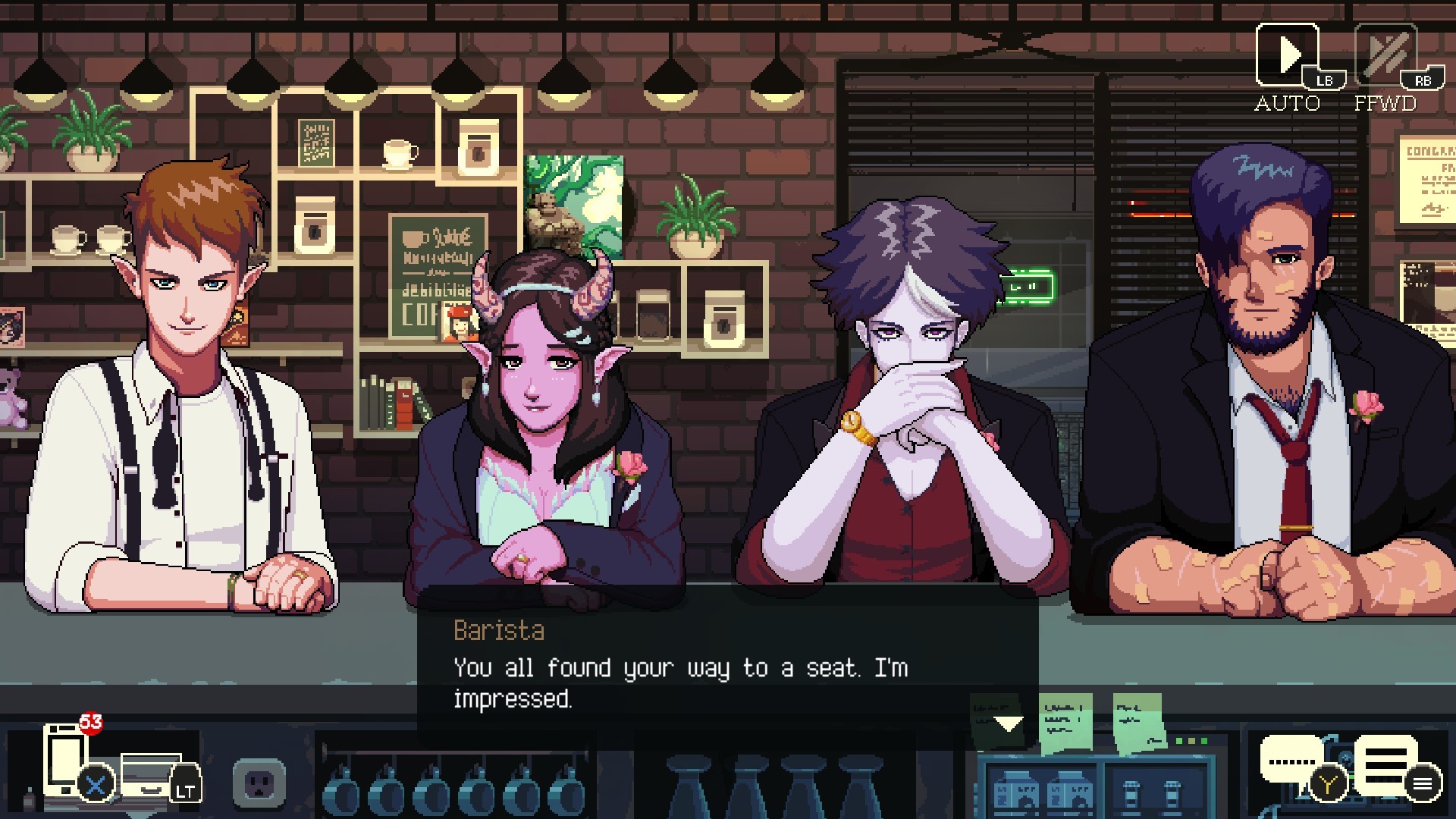
Coffee Talk Episode 2: Hibiscus & Butterfly is a sequel to the first Coffee Talk, so it will be familiar to returning players. It is a visual novel styled game, with the bulk of its appeal and gameplay on the story. You play as the owner and barista of the coffee shop, Coffee Talk. The shop mainly opens late at night, and this attracts unique interesting characters. There is something about the place that just opens people up where they’re willing to talk and share about their current issues. Usually over the course of the game, they will find a way to resolve those said issues.


The game takes place in a world where different types of people and creatures exist. There are not only humans but also werewolves, banshees, and satyrs, just to name a few. They are effectively a stand-in for the different human races, and it works well here given the added visual variety. The game takes place over fifteen different days. During each day, different customers will come to speak about their own problems. A neat bonus is that there are a lot of returning characters from the first game and since around three in-game years have passed, we get an update on how they are now. Of course, there are new characters, with the main ones, the ones that show up in the cover art, being the satyr Lucas and the banshee Riona.


Just like the original game, this is a chilled and relaxing game. The soothing music and calming tone of the dialogue gives it plenty of charm. The gameplay is limited to satisfying customer orders. You can give them any drink but giving them the correct one will help you get to the best ending for each of their stories. To create a drink, you just need to select three ingredients. There are more ingredients this time around and by extension, there are more new drinks to create. These are all based on real drinks from different countries. This may not be the most engaging or complex gameplay but it is enough. To be honest, determining what the ingredients are for the best drink for the customer is not obvious for a lot of the time.


In addition to creating the drink, you can do a few additional things such as attempting to add latte art on top. Perhaps the biggest addition are key items that you get from customers over the course of the game. Then when you are presenting a drink to another customer, you can decide whether to also give them one of the key items. The effects of doing this range from achievements to being required for certain endings. The game’s graphics also basically look the same, so there’s little improvement there but it is a nice pixel art-style with a lot of detail in the character models.


Unlike the first game, there is a common story thread happening in the background that helps tie all of the days together. It doesn’t feel as aimless like it was meandering to nowhere. On the flipside, the game is all about expressing its own opinions on various matters and can border on being presumptuous in a few instances. Since you play the barista and each day only having a limited number of recurring customers that frequent the shop, each of their stories feel personal. A lot of them are relatable and none are so exaggerated that you feel detached from them.


The game takes around five hours to finish, although that depends on your reading speed. If you manage to get good endings for all the characters, then it will cover off most of their arcs. However, that doesn’t mean that you have seen all that the game has offered. There are different dialogue and story developments if you have given different drinks or forgotten to give them key items at specific points. Furthermore, there are still one or two smaller unresolved teases that you might want to see. Most of the “postgame” is getting these alternate scenes but there is an Endless mode. One part of it allows you to select three ingredients to create different drinks, so you’re free to experiment. The other part is a challenge mode where characters will request specific drinks and you need to produce it within the time limit.


Overall, Coffee Talk Episode 2: Hibiscus & Butterfly is not only more of what made the first game so good but improves upon it. The structure and storytelling are tighter with clearer objectives and a plot thread that helps tie all the different characters, and days, together. The fact that it only introduces two new main characters while furthering the stories of existing characters is a good choice, so that it is still familiar to returning players, but not be too repetitive either.

-----------------------------------------------

For other game reviews, have a look at this page and this page.

Tuesday, November 7, 2023

Quantum Break (PC)


Quantum Break is a third person shooter action-adventure game. It follows Jack, who arrives at a university to meet his old friend, Paul Serene. Paul had successfully researched time travel and he tells Jack that he has witnessed the end of time. Paul sees himself as having to stop this catastrophe from happening, however the actions that he takes are questionable. So now Jack must find a way to find out Paul’s secrets and stop him. The game is story heavy with gameplay taking a back seat. Most of the game has you walking around from one place to the next, watching story cutscenes. You can interact with certain objects with a lot of the optional collectibles being worldbuilding text and dialogue.


The other bulk of the gameplay is the shooting. This is a third person shooter, and it has decent shooting mechanics. Jack picks up weapons from other enemies and automatically ducks behind cover when he gets near them. After the time travel accident, Jack has a few powers based on time, although some of them function more as conventional abilities. He can cast a time bomb to blast away enemies. He can erect a time shield, protecting himself from bullets. There’s the time dodge, which feels like teleporting, and he also can slow down time for his enemies. Finally, there’s time vision, which basically highlights enemies and objects of interest in the environment.


There are varying enemy types, although ultimately, there aren’t too many unique ones so it can feel boring and repetitive by the end of the game. Some of the enemy types are more annoying than others, especially the heavily armored or the heavily armed ones. The enemies like to flank you. This is deliberate as the AI is designed to force the player to keep moving and not just to camp behind cover picking off the enemies one by one. This aspect forces you to use your powers to stay alive. While the gameplay is competent, it can also feel generic.


The time abilities that Jack has feature somewhat in the exploration with light puzzle elements. Jack can climb and jump as you’d expect, but just like his running speed, it is slow and painful. He lacks the finesse and parkouring abilities of other protagonists, so platforming isn’t that fun. The puzzles are basic and are little more than just heading to the object of interest to “rewind” time. Usually this allows Jack to get on a platform to reach a higher area. These platforming segments are uninspired. To be honest, as the focus is so much on the story, there aren’t enough opportunities to utilize your time abilities, so you aren’t familiar enough with the controls to intuitively know which abilities you need for that specific moment. You just know you need to use an ability to progress but then spend a few seconds figuring out which button to press.


The most unique aspect of the game is how it tells its story through both the game’s cutscenes, and a live action TV show. They’re integrated together such that after each act, you are supposed to make a choice. The two choices supposedly change the direction of the game’s story while also affecting which TV episode you will be watching next. Unfortunately, this doesn’t work properly in the PC version as there are perpetual errors with trying to stream the episode from the services. Thus, you’ll have to watch the episode on YouTube instead. These live action segments focus mostly on side characters so it can feel tangent to the main story. It is still cool to see the real actors, as you’ll compare them to their character models in the game.


The beginning of the game where it leads up to the time travel aspect was excellent… and then the story goes downhill from there. There was a lot of potential but instead of using the time travel elements in clever and unexpected ways, it ends up treading down a well-worn path instead. The middle parts were not great as the plot developments felt like big letdowns. There is a slight pick up towards the end where it touches upon the time travel elements again, but the bulk of the story is about the politics and relationships between the characters.


The game feels short with the story zipping past but lacking substance and meaning in its developments. Despite how brief the game is, taking only ten hours or so to finish, the final sections can feel like it is unnecessarily being padded out. It’s filled with gunfights that pad out the levels and can be annoying especially when the game wasn’t too heavy on combat in the first place. The final boss was okay, and the story ultimately ended up being average. It’s not a great ending either as it tries to be clever in incorporating the time travel elements, but it lost its thunder as it is something we have seen a few times before already.


The PC version, specifically the Game Pass version, is broken. There are massive graphical glitches, the worst of which are the light flares. Green and purple light stemming from reflections or light sources in the game will obscure most of the screen and render the game basically unplayable. It’s disappointing that such a broken state of a game was never patched. The Steam version got patched but not the Game Pass / Microsoft Store version, which is just ridiculous at this point.


Overall, Quantum Break is an average game. It has passable shooting mechanics, an average story, and subpar platforming. All this combines into something that you can see had a lot of potential and it did start out with plenty of promise, but ultimately quickly loses its shine. The characters fall flat, the integration of the game and live TV show episodes is a unique idea but that doesn’t work as well either since it focused mostly on offscreen characters, so it was hard to keep the player invested.

---------------------------------------------------

For other game reviews, have a look at this page and this page.

Tuesday, October 24, 2023

Hi-Fi Rush (PC)


Hi-Fi Rush is a rhythm action game with a Saturday morning cartoon look. It’s oozing with style and being a rhythm game, music plays a large role in it. It stars Chai, who dreams of being a rock star. He participates in an experiment and ends up getting a robot arm. This was what was supposed to happen but what was an accident, however, and which had him branded as a defect, was the music player that got embedded into his chest. This “defect” allowed him to feel the beat of the world, giving him some cool abilities, such as magnetically attracting pieces of scrap metal to form an electric guitar as his weapon.


The combat is a big part of the game, and this is where the rhythm aspect lies. There is a light and heavy attack. Light attacks take up one beat while heavy attacks take up two beats. It’s a combo-based game and the combos will always hit on the beat. If you time your button presses with the beat, they’ll do extra damage. At the end of the combo is another prompt for additional damage if you get it right. It’s easy to get into and in addition to the basic combos, Chai has access to a special attack and the usual tricks of dodging, jumping and assist attacks.


There are different types of enemies with new ones being constantly introduced. They act as good tutorials for Chai’s abilities. Soon after the basic robots you’ll encounter ones that are stronger, while others have shields, some are flying, and some have ranged attacks. After one-on-one encounters, of course the game will then mix them up together in the same encounter and battles can become chaotic. You’re graded during each battle and that’s determined by how accurate your timing is and how long it took you to clear it. battles take place in an arena so you can always tell when a battle is coming up during your exploration.


The other big part of the game is the platforming. The game is linear, which is not a downside. This keeps up the pacing and allows the gameplay and level design to be tight. However, the jumping is not the best. Chai seems to lose height much too fast after a jump. This makes Chai feel heavy and may cause you to drop to your death multiple times as you try and get the hang of things. Luckily, the game is forgiving. If you fail to reach a platform, then you will spawn right before it with a little bit less health. If you die in a boss fight, you’ll respawn with full health at the stage of the boss that you died in, so you don’t have to repeat all the stages from the very beginning.


If you struggle with timing your attacks with the beat, there are some visual cues to assist you. A lot of the objects in the environment will move or flash with the beat. Chai gets a permanent companion that flashes in time with the beat. If worst comes to worst, you can permanently set a visual bar at the bottom of the screen to help. The music is generally solid, but it truly shines in some of the latter boss battles. When you realise that actions are in sync with the beat, it’s an amazing experience. Scattered around in the environment are gears which is the currency of the game. These are used to upgrade Chai’s health, abilities, and new combos to use.


The game revels in its silliness. This is a positive as combined with everything else, you’ll be constantly smiling and chuckling throughout the whole game, having a good time. It likes to poke fun at itself and in game development in general with its self-aware remarks. That said, it feels like that the developers put in most of their effort into the first half of the game. The second half by comparison felt lazier, where levels are shorter, the level designs not being as fleshed out, and then just dragging out certain elements so that it can feel repetitive. You can’t help but smile when a boss battle begins and a truly absurd develop happens. Then you’re let down when the boss battle is dragged out to be two or three times longer than it should so that it feels like a chore by the time you’re not even halfway through it.


The game takes around ten to twelve hours to finish the twelve levels. The game is quite easy on normal difficulty, although the final boss might give you a little bit of trouble in their later phases. After the story, you’ll unlock a few things including a harder difficulty and chapter unlock. You can run through the stages again to go through paths that were locked to you before. There’s also a battle gauntlet where you fight waves of enemies to obtain a high score. None of these things are revolutionary but it is something to continue with if you wish.


Overall, Hi-Fi Rush is a fantastic game. It’s the type of game that you would not expect from the developers or publishers since it is so different to what they have put out before. However, this experiment has been a success. It mixes the rhythm gameplay with the action combat surprisingly well. While Chai can be initially annoying with his typical gung-ho attitude, he’s still likable and fits in well with the style of the game and the tone that they were going for.

---------------------------------------------------

For other game reviews, have a look at this page and this page.

Tuesday, October 10, 2023

Utawarerumono: Mask of Deception (Vita)


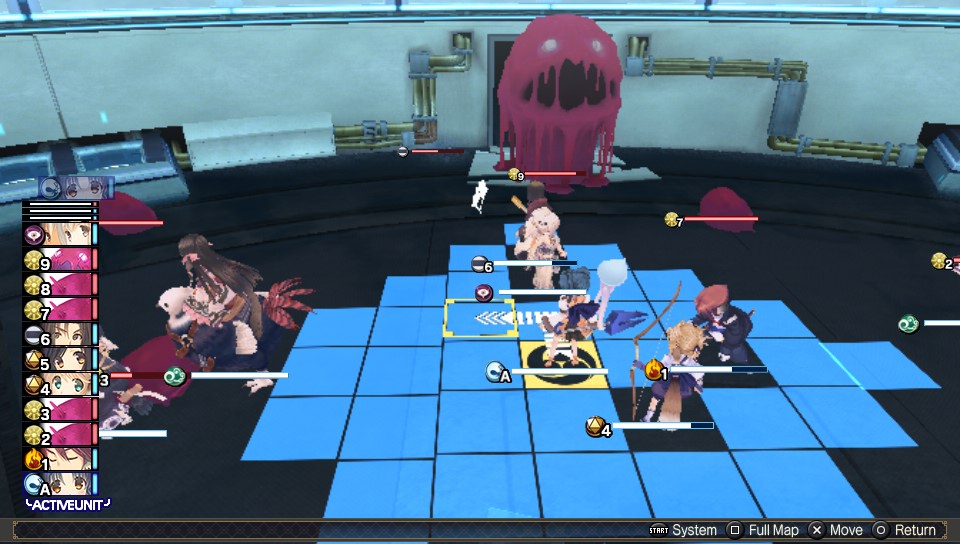
Utawarerumono: Mask of Deception is a sequel to an older game (but one which has a remake released a few years later). It is a strategy RPG and is designed for newcomers to easily enjoy as it is the start of a duology. To be clear, this is predominantly a visual novel first and foremost, with some SRPG elements. The story is supposed to be the main draw and it takes up the bulk of the gameplay. There are portions of the game where the story scenes are easily over an hour long with no other gameplay in sight, which can definitely put off some people.


The SRPG mechanics are solid. As expected, they take place on a grid system where characters can move and attack once an enemy is in range. You then time your attacks with onscreen prompts. You don’t have to do this perfectly but if you do, the character will score a critical hit so it’s worthwhile to attempt. Characters will eventually learn several different types of attacks and abilities and you can mould their stats to a degree, since you spend points to increase a specific stat of theirs. The biggest negative of the game is that it has a poor tutorial, in that it doesn’t have one. By default it is skipped and you need to go through the in-game glossy in order to find the different mechanics that intertwine and interact with each other during battles.


The system can be deep with a lot of elements within it, it just does a terrible job of introducing those gameplay mechanics. The fact that you don’t get much practice doesn’t help. The story battles are mostly easy, although the game has a tendency to throw bosses at you that can hit really hard. This means the player often employs a strategy of swarming the enemy quickly in order to whittle down their HP before too many of their own characters gets knocked out. There are some nice quality of life elements with the best one being that you are able to rewind. If you made a mistake then you can go back several turns and redo.


The story starts off slow and if you haven't played the first game, then it is a bit weird. It’s still weird and mysterious even if you have played the first game but basically, a man awakens in the middle of a forest and is aided by a girl with furry ears and a tail. She’s Kuon and given that the man has no memories, she names him Haku. Haku by comparison is physically weak but there is promise in his intellect, especially his strategic abilities. With nowhere else to go, Haku follows Kuon and the pair meets up with several characters where they end up forming a ragtag team, somewhat akin to mercenaries, albeit of a more nobler variety.


The game is very slow going, as the story takes a long time to get the ball rolling. Even midway through the game, it still feels like a chilled slice of life event as Haku slowly gets surrounded with more and more allies (mainly of the female type), without revealing what the plot actually is. What makes matters worse is that the little gameplay it has in its SRPG battle system comes up haphazardly. Sometimes there will be literal hours of story cutscenes before your next battle, while other times it’s within a few minutes. This makes it much harder to get invested into. The story itself contains some good humor, especially when Haku is punished by the other characters.


It takes a while, but the story finally gets into its pace in what is probably the last third of the game. There’s an event that pretty much spells out Haku’s backstory, which was confusing to say the least with the way it was hinted. Granted, if you had played the first game, then it wouldn’t be as confusing but for newcomers, it’s a weird twist. The nicer thing that comes out of this is that after the event, there are a lot of reappearances of past characters. We finally get to see in perspective where and when this game takes place in comparison to Prelude to the Fallen.


The story’s tone becomes darker and more political towards the end, so that it is much more akin to the first game. It can be too little too late as it rushes things, and it is obvious that it’s setting up for the sequel instead. Thus this is a big time investment that doesn’t quite pay off. The final boss is the hardest part of the game, which may shock you at first given the rest of the game was so easy that you never had needed much thought on the intricacies of the battle system. It’s still not too hard as long as you play smarter rather than just blindly attacking. The ending though was disappointing in that it had events that were supposed to be sad and hopeful but was done in a way that makes some of the characters very annoying.


For a combination visual novel SRPG, both genres of which are known for their long length, this isn’t a long game at all. While it depends on your reading speed, it can takes as short as 15 to 20 hours to complete the story. There isn’t too much to do after the game, a set of harder battles become accessible, and these are the ones that finally make you think and plan. You can also repeat any of the story battles at any time, grind your characters to level up and in general, just mess around.


Overall, Utawarerumono: Mask of Deception is an average game. While the first game was too fast paced to the point of feeling rushed, this game was too slow and dwelled too much on the slice of life aspect. Granted, this was used to world build but considering that the plot only starts to get set up right at the very end of the game meant that there wasn’t much time to build it up and flesh it out. As a result, it very much feels like the first half of a story and that you need to play the sequel to get the full experience. Unfortunately, there will be players that will be put off and not get this far.

---------------------------------------------------

For other game reviews, have a look at this page and this page.

Sword Oratoria (2017)

Sword Oratoria is a 12 episode spin-off to Is It Wrong to Try to Pick Up Girls in a Dungeon? You feel that it is supposed to follow Ais, th...